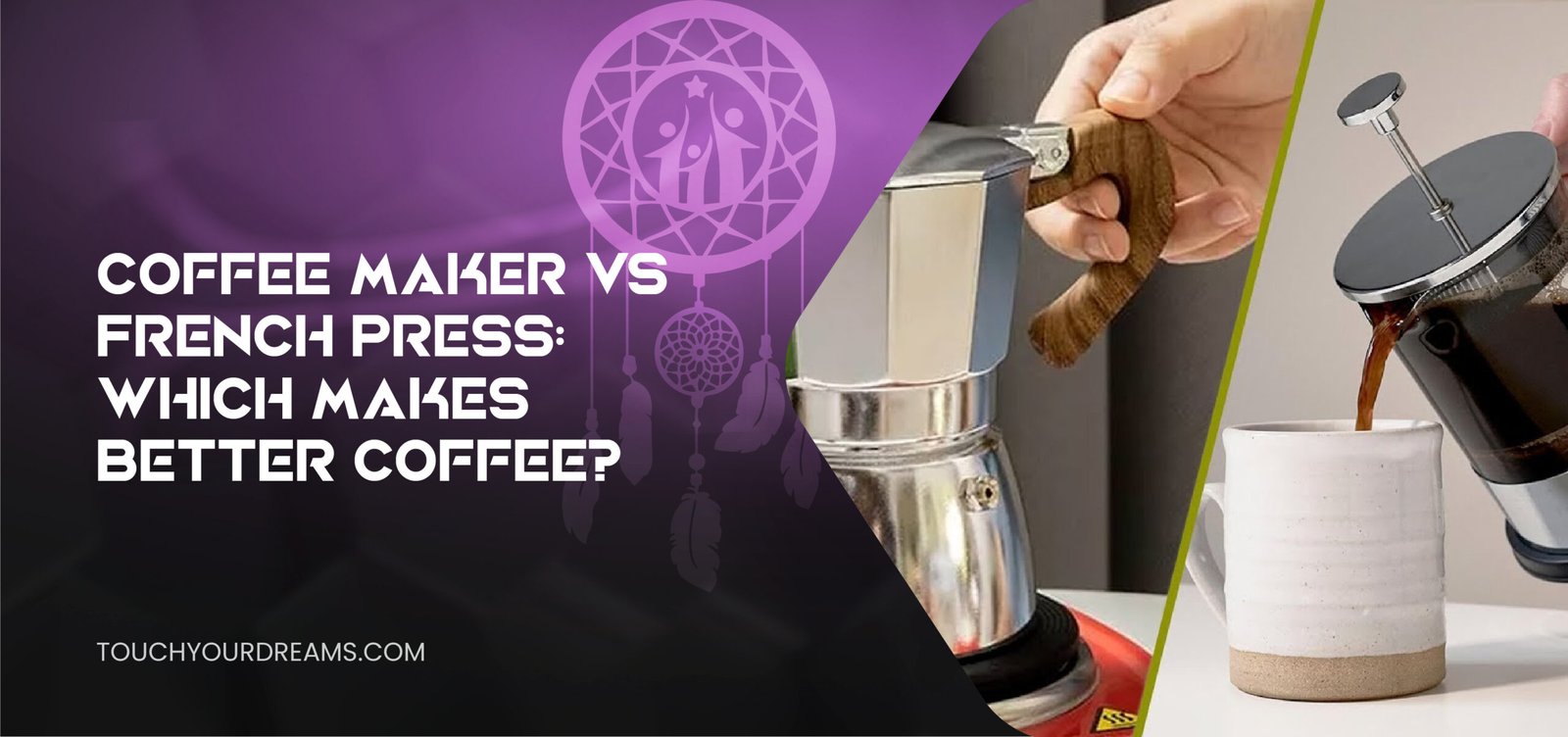
The Great Coffee Debate: Why This Choice Actually Matters
Few kitchen decisions spark as much passion among coffee lovers as the choice between a drip coffee maker and a French press. Ask ten coffee drinkers which one makes better coffee and you’ll get ten very different — and very confident — answers. Some will swear by the clean, consistent reliability of their programmable drip machine. Others will look at you like you’ve personally offended them if you suggest anything beats the rich, full-bodied immersion brew of a French press.
But here’s the thing — both sides have a point. And that’s exactly what makes this debate so interesting and so worth having properly. Because the truth is, “better coffee” isn’t a universal standard. It’s deeply personal, shaped by your taste preferences, your lifestyle, your budget, and how much mental energy you’re willing to invest in your morning brew.
So let’s break this down fairly, thoroughly, and honestly — no brand loyalty, no coffee snobbery, just real information that helps you make the smartest choice for your cup.
Two Very Different Philosophies of Brewing
At their core, the drip coffee maker and the French press represent two completely different approaches to extracting flavor from coffee grounds. The drip machine is about automation and consistency — it does the work for you, reliably, every time. The French press is about immersion and intention — it puts you in control of the process and rewards patience with complexity. It’s a bit like comparing a GPS-guided cruise control to driving stick shift on a mountain road. Both get you to the destination. But the experience, and what you get out of it, is entirely different.
What “Better Coffee” Really Means
Before we dive into the comparison, we need to establish something important: there is no objectively better brew method. “Better” depends entirely on what you value. Do you prioritize bold, complex flavor above all else? Do you care more about speed and convenience? Are you health-conscious? Environmentally minded? A one-cup-a-day person or a four-mug-a-morning person? All of these factors influence which method will serve you best. Keep your own priorities in mind as we work through every angle of this comparison.
Understanding How Each Method Works
To compare these two methods intelligently, you first need to understand what’s actually happening inside each one when coffee is being brewed.
Still deciding which brewing method suits you best? Explore our complete guide to the best beginner coffee maker guide and start your coffee journey with confidence and the right setup.
How a Drip Coffee Maker Brews Your Cup
A drip coffee maker heats water in a reservoir, then passes it through a heating element that brings it close to the ideal brewing temperature. That hot water drips — hence the name — through a paper or reusable filter containing ground coffee, and gravity pulls the extracted liquid down into a carafe or mug below. The paper filter catches the coffee grounds and most of the oils produced during extraction, delivering a cleaner, clearer cup. The whole process typically takes between four and eight minutes depending on the machine, and once it’s done, the machine keeps the coffee warm on a heated plate.
How a French Press Extracts Flavor
The French press works on a completely different principle called full immersion brewing. You add coarsely ground coffee directly to the carafe, pour hot water over it, and let the grounds steep — fully submerged in the water — for about four minutes. Then you press the metal mesh plunger down slowly, which pushes the grounds to the bottom and separates them from the brewed liquid above. There’s no paper filter involved, which means the natural oils and fine particles from the coffee remain in your cup, contributing to a heavier body and more pronounced flavor.
The Science Behind the Difference
The distinction between filtered and unfiltered brewing is more significant than it might seem. Paper filters in drip machines absorb the coffee’s natural oils and trap micro-fine particles, producing a lighter, cleaner cup. The metal mesh of a French press allows those oils and particles to pass through freely, resulting in a thicker, more textured brew with a richer mouthfeel. Think of it like comparing filtered water to mineral water — both are water, but they taste and feel noticeably different on the palate.
Taste and Flavor: The Most Important Comparison
If we’re being honest, this is the section most people came here for. Everything else is supporting information. Flavor is the main event.
What Drip Coffee Tastes Like and Who Loves It
Drip coffee tends to produce a clean, bright, and balanced cup. Because the paper filter removes most oils and sediment, the flavors that come through are often lighter and more delicate — you can detect subtle notes like fruit, floral hints, or mild sweetness that might otherwise get masked by heavier body. This makes drip coffee an excellent choice for people who enjoy lighter roasts, flavored coffees, or single-origin beans where nuance matters. It’s also consistent. You press the button, you get the same cup every time, which for many people is exactly the point.
What French Press Coffee Tastes Like and Who Loves It
French press coffee is a completely different sensory experience. The full immersion process extracts more from the grounds, and the retained oils give the coffee a heavier, almost velvety mouthfeel. The flavor is bolder, more intense, and more complex — darker roasts especially shine in a French press because the brewing method amplifies their depth and character. If you love the kind of coffee that feels substantial, that coats your palate and lingers pleasantly after each sip, French press brewing will likely feel like a revelation. It’s the brewing method of choice for serious coffee enthusiasts who want maximum flavor expression with minimal equipment interference.
Side-by-Side Flavor Breakdown
Put them head to head and here’s what you get: drip coffee is clean, consistent, and approachable — great for everyday drinking and for people who enjoy a lighter profile. French press is bold, complex, and immersive — extraordinary for those who want their coffee to have presence and character. Neither is universally superior. They’re different instruments playing different music, and the one you prefer depends entirely on the song you want to hear.
Convenience and Ease of Use
Flavor is crucial, but let’s be real — convenience plays an enormous role in what we actually use on a Tuesday morning when we’re already running late.
How Easy Is It to Use a Drip Coffee Maker?
Extremely easy, especially with a programmable machine. You set it up the night before — fill the water, add the filter and grounds, set the timer — and wake up to fresh coffee already waiting for you. There’s nothing to monitor, nothing to time, nothing to mess up. The machine handles everything from water temperature to brew duration. For households with multiple coffee drinkers or for anyone who values a completely hands-off morning routine, a drip machine is almost impossibly convenient.
How Easy Is It to Use a French Press?
Slightly more involved, but still remarkably simple once you’ve done it a few times. You need hot water at the right temperature, a consistent grind, a four-minute timer, and a smooth, steady press at the end. The process takes about six to seven minutes start to finish, and it requires your attention for most of that time. You can’t set it and walk away the way you can with a drip machine. But many people find this focused, hands-on ritual genuinely enjoyable — it’s a moment of calm intentionality in an otherwise chaotic morning.
Which One Wins for Busy Mornings?
The drip coffee maker wins on pure convenience, and it’s not particularly close. If your mornings are rushed, unpredictable, or shared with other people who have different schedules and preferences, the automation of a drip machine is invaluable. The French press asks more of you — but rewards that investment with a noticeably better cup for those who prioritize flavor over speed.
Cost Comparison: Upfront and Long-Term
Your wallet has opinions in this debate too, and they’re worth listening to.
What You Spend on a Coffee Maker
A decent beginner drip coffee maker starts around $25 to $40. A solid mid-range model with programmable features runs between $60 and $120. High-end machines from brands like Breville or Technivorm can push past $200 to $350. Beyond the initial purchase, you’ll spend money on paper filters — roughly $5 to $10 per month depending on how much you brew — and occasional descaling solutions. Over a year, those consumable costs add up in a way that’s easy to underestimate.
What You Spend on a French Press
A quality French press — and we’re talking genuinely quality here, not a flimsy knockoff — costs anywhere from $30 to $60. The legendary Bodum Chambord sits comfortably in that range and lasts for years with basic care. Beyond the initial purchase, you spend essentially nothing extra. No filters, no pods, no replacement parts. Just coffee and hot water. Over the long run, the French press is one of the most economical brewing methods in existence.
The Real Cost Per Cup
When you factor in the cost of paper filters and machine maintenance, a drip coffee maker costs slightly more per cup than a French press over time. The difference isn’t dramatic, but if you’re brewing multiple cups daily over several years, it adds up to a meaningful amount. For budget-conscious coffee drinkers, the French press wins the long-term cost comparison handily.
Health Considerations: Is One Healthier Than the Other?
This is a question that doesn’t come up often enough in the coffee maker vs French press conversation, but the answer is genuinely interesting.
The Role of Paper Filters in Drip Coffee
Paper filters do more than just keep grounds out of your cup. They also trap diterpenes — natural compounds found in coffee, primarily cafestol and kahweol — that have been shown in research to raise LDL cholesterol levels when consumed regularly in significant quantities. For people with cholesterol concerns or cardiovascular risk factors, this filtering effect is actually a meaningful health benefit of drip coffee.
Oils and Cholesterol in French Press Coffee
Because French press brewing uses no paper filter, those same diterpenes remain in your cup. Studies have suggested that regular, heavy French press consumption can modestly raise LDL cholesterol over time. To be clear, the effect is modest and context-dependent — a cup or two a day is unlikely to cause issues for most healthy adults — but for anyone actively managing their cholesterol levels, it’s a factor worth knowing about.
What the Research Actually Says
The overall health picture for both methods is overwhelmingly positive — coffee itself is associated with numerous health benefits including improved cognitive function, reduced risk of certain diseases, and powerful antioxidant activity. The cholesterol consideration is real but relatively minor in the grand scheme of things for most people. If you’re healthy and not managing active cholesterol issues, the difference between the two methods from a health standpoint is minimal. If you do have concerns, drip coffee with a paper filter is the more cautious choice.
Brew Customization and Control
How much do you want to tinker with your brew? Because the two methods offer very different levels of creative control.
Tweaking Your Drip Coffee Machine
Modern drip machines offer more customization than the basic models of decades past. You can often adjust brew strength, water temperature, and bloom time on higher-end models. Programmable timers add scheduling flexibility. But fundamentally, you’re working within the parameters the machine sets for you. It’s a guided experience — reliable and consistent, but not particularly expressive.
The Fine-Tuned Control of French Press Brewing
With a French press, you control almost every variable: the grind size, the water temperature, the coffee-to-water ratio, the steeping time, and the speed and pressure of the plunge. Each of these variables affects the final cup in detectable ways, and learning to manipulate them is part of the genuine pleasure of French press brewing. Want a stronger cup? Add more grounds or steep longer. Want something smoother? Use slightly cooler water. The French press is a canvas, and you’re the artist.
Who Has More Creative Freedom?
French press, without question. It hands you the controls and trusts you to use them. For coffee drinkers who enjoy experimentation, learning, and the satisfaction of dialing in their perfect cup through trial and adjustment, French press brewing offers a depth of engagement that no drip machine can match.
Cleanup and Maintenance
Let’s talk about the part nobody loves but everyone has to deal with.
Cleaning a Drip Coffee Maker
Rinsing the carafe and filter basket after each use is straightforward enough, but the real maintenance challenge with drip machines is descaling — the removal of mineral buildup inside the machine’s water lines and heating element. Depending on your water hardness and brewing frequency, this needs to happen every one to three months. It’s not difficult, but it does require descaling solution or white vinegar, a full cleaning cycle, and a bit of time. Neglect it and your machine brews slower, hotter or cooler than it should, and eventually breaks down prematurely.
Cleaning a French Press
The French press cleanup has a reputation for being messy — mostly because of the spent grounds. Getting them out of the carafe neatly requires either rinsing them into a strainer (not your drain, which they can clog over time) or scooping them into the compost or trash. Once the grounds are out, the carafe, plunger, and mesh filter wash easily by hand or in the dishwasher. There’s no descaling, no internal components to worry about, and no mineral buildup to manage. Overall, it’s a simpler maintenance situation — just slightly messier in the moment.
Which One Is Less of a Hassle?
They’re honestly about equal, just messy in different ways. The drip machine is cleaner cup-to-cup but demands more periodic deep maintenance. The French press involves a bit more hands-on cleanup after each use but requires virtually no long-term upkeep. Which hassle you prefer is a matter of personal tolerance.
Environmental Impact
In a world increasingly conscious of sustainability, this comparison deserves attention.
The Waste Generated by Drip Coffee Makers
Paper filters are single-use and generate consistent waste unless you switch to a reusable metal or cloth filter. Drip machines also consume electricity continuously when the warming plate is active — a small but real energy draw that adds up over years of daily use. Pod-based drip systems like Keurig are significantly worse environmentally, generating enormous quantities of plastic pod waste with each single-serve brew.
How Eco-Friendly Is the French Press?
The French press is one of the most environmentally friendly brewing methods available. It uses no paper filters, no electricity, no pods, and no disposable components of any kind. The grounds it produces are fully compostable. If environmental impact is a meaningful factor in your decision, the French press wins this category clearly and decisively.
Who Should Choose Which?
Let’s bring it all together with a direct, honest recommendation for each type of coffee drinker.
The Coffee Maker Is Right for You If…
You brew for multiple people regularly, you value a completely hands-off morning routine, you prefer a lighter and cleaner flavor profile, you’re managing cholesterol and want filtered coffee, or you simply want the same reliable cup every single morning without any fuss. The drip coffee maker is a workhorse that serves households and busy people exceptionally well.
The French Press Is Right for You If…
You’re a flavor-first coffee drinker who craves bold, rich, and complex cups. You enjoy being involved in the brewing process and find satisfaction in small rituals. You’re brewing for yourself or one other person. You’re budget-conscious and want the most economical long-term setup. You care about your environmental footprint. Or you simply want to understand coffee more deeply — because nothing teaches you about extraction, grind, and ratio quite like a French press does.
Conclusion
So — coffee maker or French press? Which one makes better coffee? The honest answer is that the French press makes more flavorful, complex, and characterful coffee for those who value taste above all else. But the drip coffee maker makes more convenient, consistent, and scalable coffee for those who prioritize ease, reliability, and volume.
Neither is universally superior. They serve different people with different priorities, and both have an important and legitimate place in the world of home brewing. The best one for you is whichever fits your lifestyle most naturally and makes you genuinely excited to brew your next cup.
If you’ve never tried a French press and you’re a committed coffee drinker, we’d strongly encourage you to give it a shot — even if you keep your drip machine for busy mornings. You might be surprised at how much flavor your current setup has been leaving behind. And if you love your drip machine and it serves you beautifully every morning, never let anyone make you feel like that’s the wrong choice. Great coffee is whatever makes you happy in the cup.
Thinking beyond coffee and into gaming upgrades? Check out the latest gaming consoles comparison to find the perfect system for performance, features, and value in 2026.
FAQs
1. Does French press coffee have more caffeine than drip coffee?
Generally speaking, yes — French press coffee tends to have slightly more caffeine per cup than drip coffee. The full immersion brewing process extracts more total compounds from the grounds, including caffeine. However, the difference isn’t dramatic and varies based on your coffee-to-water ratio, steep time, and the specific beans you’re using. If caffeine content is a concern, adjusting your ratio is a more reliable lever than switching brew methods entirely.
2. Can I use the same coffee grounds in both a French press and a drip machine?
Technically yes, but you’ll get much better results if you use the appropriate grind for each method. Drip machines work best with a medium grind, while French press requires a coarser grind to prevent over-extraction and to keep grounds from slipping through the mesh filter. Using fine grounds in a French press, for example, will result in a bitter, over-extracted cup with a lot of sediment at the bottom.
3. Is French press coffee bad for your heart?
The research on this topic is nuanced. French press coffee contains diterpenes — compounds that can raise LDL cholesterol with regular, heavy consumption. For people with existing cardiovascular concerns or high cholesterol, switching to paper-filtered drip coffee may be advisable. For healthy adults drinking one to two cups per day, the risk is considered minimal. Always consult your doctor if you have specific health concerns related to diet and coffee consumption.
4. How long does a French press last compared to a drip coffee maker?
A high-quality French press — with proper care — can last a decade or more. The main point of failure is the glass carafe, which can crack or shatter if mishandled. Metal or double-walled stainless steel versions eliminate even that risk. Drip coffee makers typically last between five and ten years depending on brand, usage frequency, and how consistently you descale and maintain the machine. In terms of longevity, both can serve you for many years with proper care.
5. Which method is better for entertaining guests — coffee maker or French press?
For groups of four or more, the drip coffee maker is the more practical choice. It can brew eight to twelve cups in one cycle, keeps coffee warm on a heated plate, and requires minimal effort or attention from the host. A French press typically brews two to four cups at a time and cools faster, making it better suited to intimate settings or individual brewing rather than serving a crowd. If you frequently host larger gatherings, a programmable drip machine is the more gracious and efficient option.