
Quick Answer:
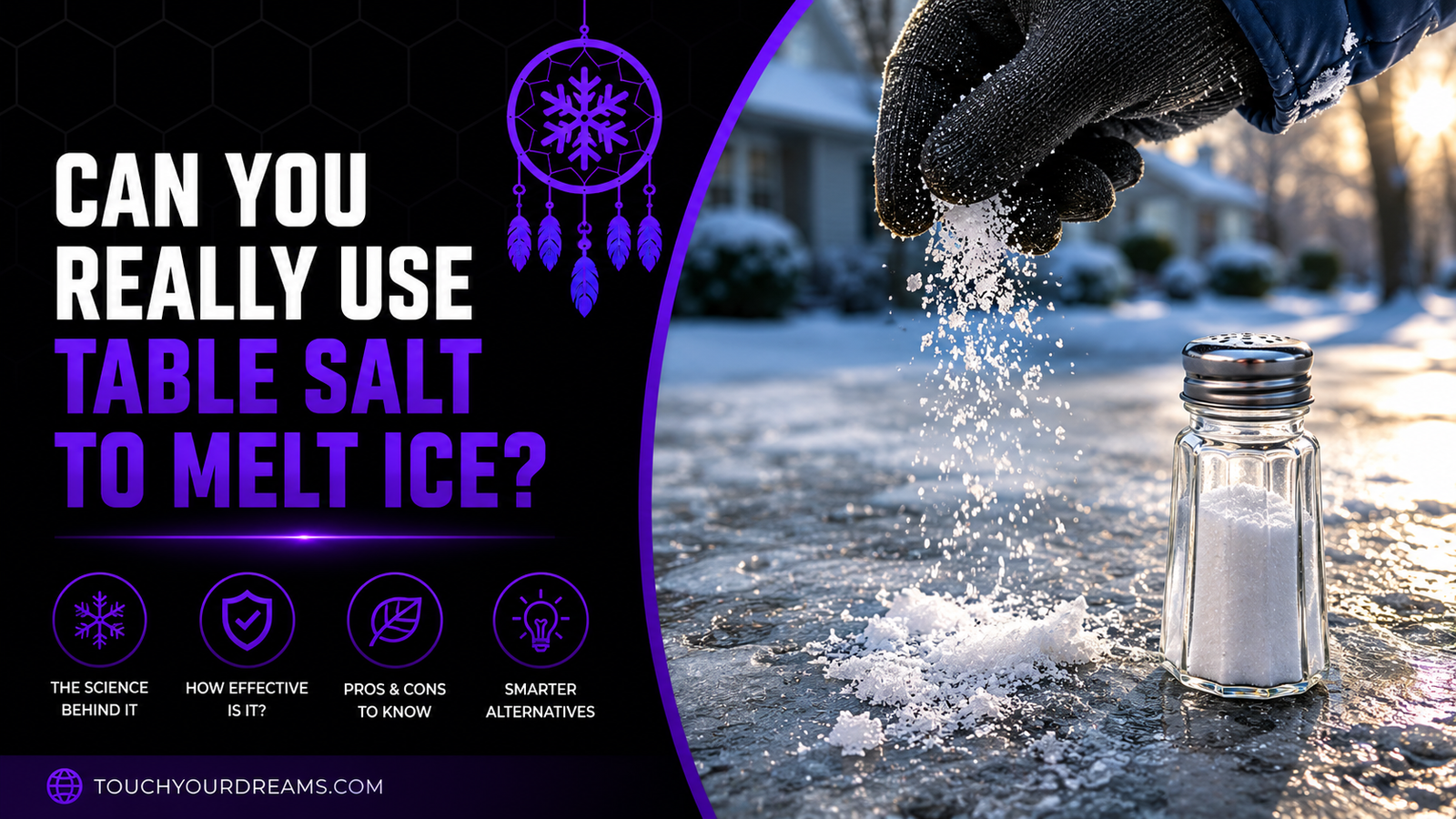
Yes, table salt can melt ice by lowering the freezing point of water. It’s effective on small icy areas such as steps, sidewalks, and porches when temperatures are moderately cold. However, it becomes less effective in very low temperatures and may contribute to damage to concrete, plants, and nearby soil if overused. For larger areas or extreme winter conditions, commercial ice melt products are often a better choice.
Key Takeaways
- Table salt can melt ice by lowering water’s freezing point.
- It works best in moderately cold weather.
- Rock salt is generally more practical for large outdoor areas.
- Excessive salt use may affect concrete, vegetation, and pets.
- Alternative de-icers may perform better in extremely cold temperatures.
Quick Comparison
| De-Icing Option | Best For | Advantages | Limitations |
|---|---|---|---|
| Table Salt | Small icy areas | Readily available, inexpensive | Less effective in extreme cold |
| Rock Salt | Driveways and sidewalks | Cost-effective for large areas | Can affect concrete and plants |
| Calcium Chloride | Very cold temperatures | Works at much lower temperatures | Usually more expensive |
| Magnesium Chloride | Pet- and plant-conscious use | Gentler on some surfaces | Higher cost than rock salt |
| Sand | Improving traction | No chemical melting | Does not melt ice |
Can Table Salt Really Melt Ice?
Yes. Table salt contains sodium chloride, the same basic chemical found in rock salt. When spread over ice, it mixes with the thin layer of liquid water already present on the surface and lowers its freezing point. This allows more ice to melt, even when temperatures are below 32°F (0°C).
Although table salt works, it’s generally more practical for small areas because it comes in smaller packages and costs more per pound than bulk rock salt.
How Does Table Salt Melt Ice?
Salt melts ice through a scientific process known as freezing point depression.
Normally, water freezes at 32°F (0°C). When salt dissolves into water, it lowers the temperature at which the water freezes. Instead of refreezing immediately, the salty water remains liquid at colder temperatures, allowing the surrounding ice to continue melting.
The process continues as long as the temperature remains within salt’s effective working range.
Table Salt vs. Rock Salt
Although both products contain sodium chloride, they’re designed for different purposes.
Table Salt
Best for:
- Small icy steps
- Walkways
- Emergency household use
Advantages:
- Easy to find
- Works well on limited areas
Disadvantages:
- More expensive for outdoor use
- Fine grains wash away quickly
Rock Salt
Best for:
- Driveways
- Sidewalks
- Parking areas
Advantages:
- Sold in large quantities
- Better suited for covering larger surfaces
- More economical
Disadvantages:
- May damage nearby vegetation if overused
- Less effective in extremely low temperatures
When Does Table Salt Stop Working?
Table salt performs best in moderately cold weather but gradually loses effectiveness as temperatures fall.
It generally becomes much less effective below approximately 15°F (-9°C). In colder conditions, calcium chloride or magnesium chloride often provide better ice-melting performance because they continue working at significantly lower temperatures.
Can Table Salt Damage Concrete or Plants?
Yes, especially when used repeatedly or in large amounts.
Potential effects include:
Concrete
Repeated freeze-thaw cycles combined with excessive salt use may contribute to surface deterioration over time, particularly on older or damaged concrete.
Plants and Grass
Salt runoff can accumulate in soil, making it harder for plants to absorb water and potentially damaging nearby vegetation.
Pets
Salt crystals may irritate sensitive paw pads after walks.
Using only the amount needed and sweeping away leftover salt after the ice has melted can help reduce these risks.
Best Alternatives to Table Salt
Rock Salt
A practical choice for treating larger outdoor surfaces.
Calcium Chloride
One of the most effective de-icers for extremely cold weather.
Magnesium Chloride
Often chosen when minimizing potential damage to plants or concrete is a priority.
Pet-Friendly Ice Melt
Specially formulated products designed to reduce irritation for pets while still helping melt ice.
Sand
Although sand doesn’t melt ice, it provides additional traction on slippery surfaces.
Tips for Using Table Salt Safely
To get the best results:
- Apply only a light, even layer.
- Remove loosened slush after melting.
- Avoid excessive application.
- Keep salt away from lawns and flower beds whenever possible.
- Store salt in a sealed container to keep it dry.
Using more salt than necessary rarely improves melting performance and may increase environmental impact.
Frequently Asked Questions
Can table salt melt thick ice?
Yes, but it works more slowly on thick ice. Breaking the ice into smaller sections first can improve results.
Is table salt safe for pets?
Large amounts of salt can irritate paws and may be harmful if ingested. Pet-friendly ice melt products are a better option in areas frequently used by animals.
Does hot water work better than salt?
Hot water melts ice quickly but may refreeze if outdoor temperatures remain below freezing. Salt generally provides longer-lasting protection against refreezing.
Can table salt prevent ice from forming?
Applying a small amount before freezing precipitation may help reduce ice formation in moderately cold conditions.
Which salt melts ice the fastest?
Calcium chloride typically works faster and remains effective at lower temperatures than sodium chloride (table salt or rock salt).
Final Thoughts
Table salt can be an effective emergency solution for melting ice on small outdoor surfaces, but it isn’t always the best choice. It works by lowering the freezing point of water, making it useful for steps, sidewalks, and porches in moderately cold weather. For larger driveways or extremely low temperatures, dedicated ice-melt products often provide better performance. Whatever product you choose, applying it carefully and only where needed will help improve safety while minimizing potential damage to concrete, landscaping, and the surrounding environment.