Quick Answer:
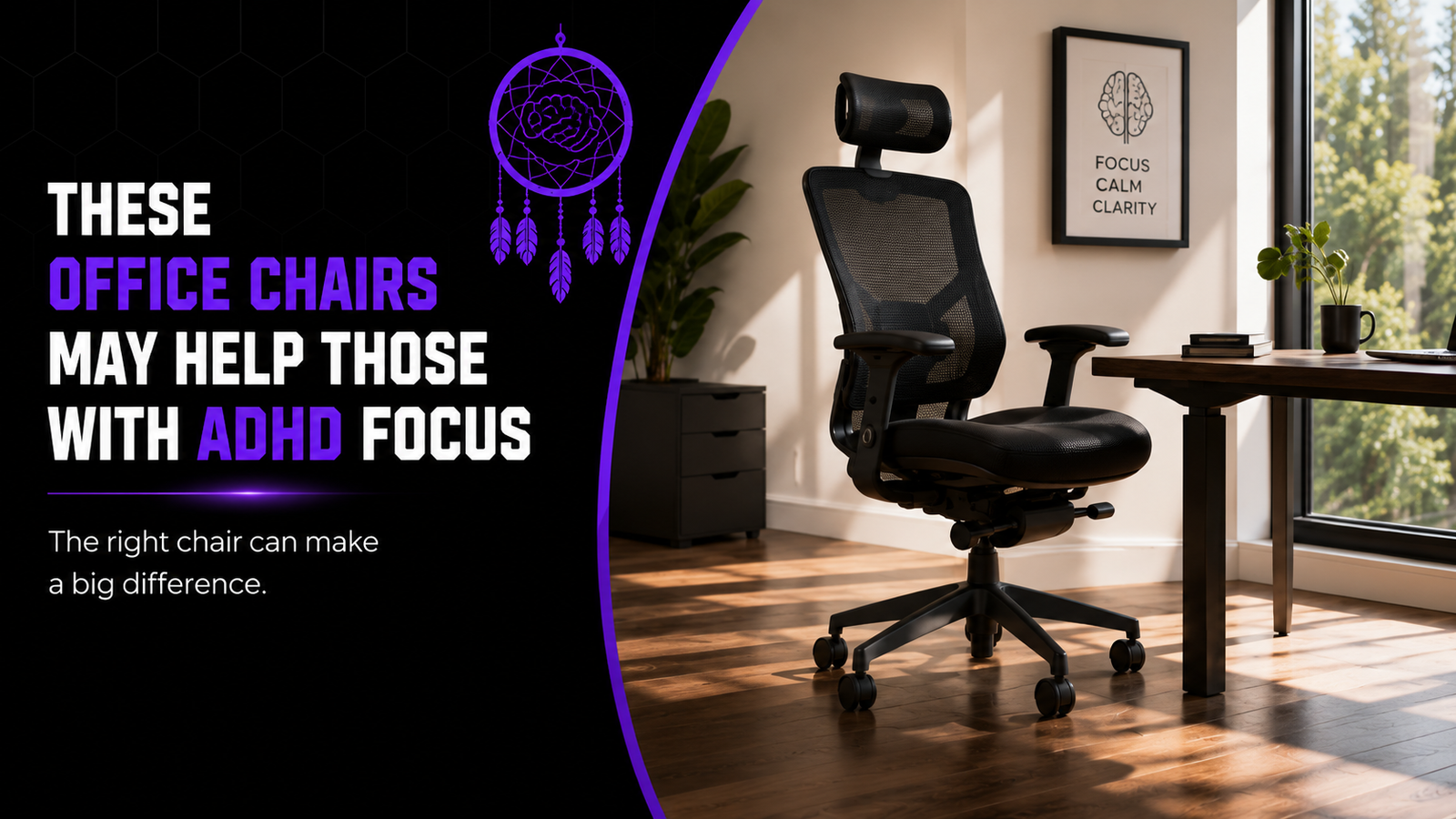
An office chair can’t treat ADHD, but the right chair can improve comfort, support healthy posture, and reduce physical distractions that may interrupt your workflow. Ergonomic chairs, active sitting chairs, and other adjustable seating options can make long hours at a desk more comfortable, helping you stay engaged with your work. The key is choosing a chair that fits your body, your workspace, and your daily routine.
Key Takeaways
- No office chair can treat or manage ADHD.
- A supportive chair may reduce physical discomfort that interrupts work.
- Ergonomic adjustments are more important than brand names.
- Some people prefer chairs that allow gentle movement instead of rigid sitting.
- Regular breaks, stretching, and an organized workspace are just as important as choosing the right chair.
Why Your Office Chair Matters
Whether you’re working from home, studying, gaming, or spending eight hours at a desk, your chair has a significant impact on your daily comfort. Sitting in an uncomfortable chair for long periods can lead to back pain, neck stiffness, sore shoulders, and poor posture. These physical discomforts can make it harder to stay engaged with tasks, regardless of whether you have ADHD.
People with ADHD often prefer changing positions, fidgeting, or moving throughout the day. While movement itself isn’t a solution, being forced to sit in an uncomfortable position can become another distraction. Choosing a chair that supports natural movement and proper posture may help create a more comfortable working environment.
The goal isn’t to find an “ADHD chair.” Instead, it’s about selecting seating that reduces unnecessary discomfort so you can focus on your work rather than constantly adjusting your position.
Can an Office Chair Help Someone with ADHD Focus?
It’s important to set realistic expectations.
An office chair cannot improve attention, treat ADHD, or replace medical care, therapy, or healthy work habits. However, physical comfort plays an important role in how productive many people feel during long work sessions.
A well-designed chair may help by:
- Supporting healthy posture
- Reducing lower back pressure
- Encouraging better sitting habits
- Allowing comfortable position changes
- Minimizing fatigue during extended work
For many people, discomfort becomes one more thing competing for attention. Removing that distraction can make a workspace feel more comfortable and easier to use for long periods.
Think of an ergonomic chair as one part of a productive workspace rather than a standalone solution.
Features to Look for in an ADHD-Friendly Office Chair
There isn’t a chair specifically designed for ADHD, but certain ergonomic features can improve comfort and flexibility.
Adjustable Lumbar Support
Proper lumbar support helps maintain the natural curve of your lower back. A chair with adjustable lumbar support allows you to customize the fit instead of forcing your body into one position.
Seat Height Adjustment
Your feet should rest flat on the floor while your knees remain close to a 90-degree angle. Being able to adjust seat height helps reduce strain on your legs and lower back.
Seat Depth
A seat that’s too deep or too shallow can become uncomfortable over time. Ideally, there should be a small gap between the edge of the seat and the back of your knees.
Reclining Backrest
Changing your sitting position throughout the day reduces pressure on your spine and muscles. Look for a chair with a reclining mechanism that lets you lean back comfortably when needed.
Adjustable Armrests
Armrests should support your elbows without forcing your shoulders upward. Adjustable armrests also reduce strain on your wrists while typing.
Breathable Materials
Mesh-backed chairs improve airflow and help keep you cool during long work sessions. This can make a noticeable difference if you spend many hours at your desk.
Comfortable Seat Cushion
A supportive cushion distributes weight evenly and reduces pressure points. Extremely soft cushions may feel comfortable at first but often provide less support over time.
Types of Office Chairs Worth Considering
Different chair styles suit different people. The best option depends on how you work and what feels comfortable to you.
Ergonomic Office Chairs
These are the most popular choice for professionals and remote workers. They typically include adjustable lumbar support, armrests, reclining mechanisms, seat height adjustment, and durable construction.
Best for:
- Daily office work
- Remote workers
- Students
- Long hours at a desk
Active Sitting Chairs
Active sitting chairs encourage small, controlled movements instead of keeping your body completely still. Some people enjoy the flexibility they provide, particularly if they naturally shift positions while working.
While they aren’t suitable for everyone, they can be an alternative to traditional seating for certain work styles.
Balance Ball Chairs
These chairs introduce gentle movement by requiring you to engage your core muscles while sitting. Some users enjoy the active sitting experience, but they generally aren’t intended to replace a traditional ergonomic chair for an entire workday.
Kneeling Chairs
Kneeling chairs offer a different sitting position by shifting some of your body weight from your hips to your shins. This design encourages a more open hip angle and may promote an upright posture for some users. Many people find kneeling chairs comfortable for short periods, especially when alternating between different seating positions throughout the day.
However, they aren’t intended for everyone or for continuous use. If you work at a desk for several hours, it’s often better to switch between a kneeling chair and a traditional ergonomic chair rather than relying on one seating style all day.
Best for:
- Short work sessions
- People who enjoy changing sitting positions
- Users looking for an alternative ergonomic option
Traditional Task Chairs
Traditional task chairs are a practical option for many home offices. While they may not include every premium ergonomic feature, many models still offer adjustable height, swivel bases, reclining backs, and comfortable cushioning.
If your budget is limited, a well-built task chair with essential ergonomic adjustments can provide excellent value without sacrificing everyday comfort.
How to Choose the Right Office Chair
Finding the right office chair is about more than choosing the most expensive model. The best chair is the one that fits your body, supports your posture, and matches the way you work every day.
Match the Chair to Your Body
Your height, weight, and body proportions all influence how comfortable a chair feels. Look for adjustable seat height, seat depth, lumbar support, and armrests so you can customize the fit instead of adapting your posture to the chair.
Think About Your Work Routine
Someone who spends eight or more hours at a desk has different needs than someone who only sits for occasional meetings. If you’re working full-time from home, investing in a higher-quality ergonomic chair often provides better long-term comfort and durability.
Prioritize Adjustability
The more adjustment options a chair offers, the easier it is to create a comfortable seating position.
Important adjustments include:
- Seat height
- Seat depth
- Lumbar support
- Recline angle and tension
- Armrest height and width
- Headrest position (if included)
Check Build Quality
A sturdy frame, durable casters, quality upholstery, and a solid base all contribute to a chair’s lifespan. Reading long-term customer reviews can provide useful insight into how a chair performs after months or years of daily use.
Consider the Warranty
A longer warranty often reflects greater confidence in the product’s durability. It’s also worth checking whether replacement parts are readily available should you ever need repairs.
Common Mistakes When Buying an Office Chair
Many buyers focus on appearance or price without considering how the chair will feel after several hours of use. Avoid these common mistakes:
- Buying a chair based only on its design.
- Ignoring lumbar support and adjustability.
- Choosing a chair that’s too large or too small for your body.
- Assuming the most expensive chair is automatically the best.
- Forgetting to check warranty coverage and customer reviews.
- Overlooking breathable materials if you work long hours.
Taking the time to compare features before buying can help you avoid discomfort and unnecessary replacement costs later.
Additional Workspace Tips That May Support Focus
A comfortable chair is only one part of a productive workspace. Small adjustments to your overall setup can have just as much impact on how comfortable and engaged you feel throughout the day.
Consider these simple improvements:
- Position your monitor so the top of the screen is at eye level.
- Keep your keyboard and mouse close enough to avoid reaching.
- Use a footrest if your feet don’t rest comfortably on the floor.
- Keep frequently used items within easy reach.
- Reduce unnecessary desk clutter to create a cleaner workspace.
- Use good lighting to reduce eye strain.
- Stand up, stretch, or walk for a few minutes every 30 to 60 minutes.
These habits support better posture and help prevent stiffness during long work sessions.
Frequently Asked Questions
Can an office chair improve focus?
Not directly. An office chair cannot treat ADHD or increase attention. However, reducing physical discomfort may make it easier for some people to stay comfortable while working.
Are ergonomic chairs worth the investment?
If you spend several hours each day at a desk, an ergonomic chair is often a worthwhile investment. Better adjustability, improved support, and durable construction can enhance long-term comfort and reduce the need for frequent replacements.
What is active sitting?
Active sitting refers to chairs that allow gentle movement while seated. Some people find this style more comfortable than remaining completely still for long periods.
Are balance chairs suitable for all-day use?
Balance chairs can be useful for short sessions, but many users prefer alternating between them and a traditional ergonomic chair for better overall comfort.
How often should you take breaks while working?
Even with an excellent office chair, regular movement is important. Standing up, stretching, or walking for a few minutes every 30 to 60 minutes can help reduce stiffness and improve overall comfort during the workday.
Final Thoughts
The right office chair won’t eliminate distractions or treat ADHD, but it can make your workspace significantly more comfortable. By supporting good posture, reducing physical strain, and allowing natural movement, a well-designed chair can help create an environment that’s better suited for productive work.
When choosing a chair, focus on adjustability, build quality, and comfort rather than marketing claims or price alone. Pair your chair with healthy habits—such as taking regular breaks, maintaining good posture, and keeping your workspace organized—and you’ll create a setup that supports both comfort and long-term productivity.
Whether you’re working from home, studying, or spending long hours in the office, investing in a chair that fits your needs is an investment in your daily comfort and overall work experience.