
Quick Answer:
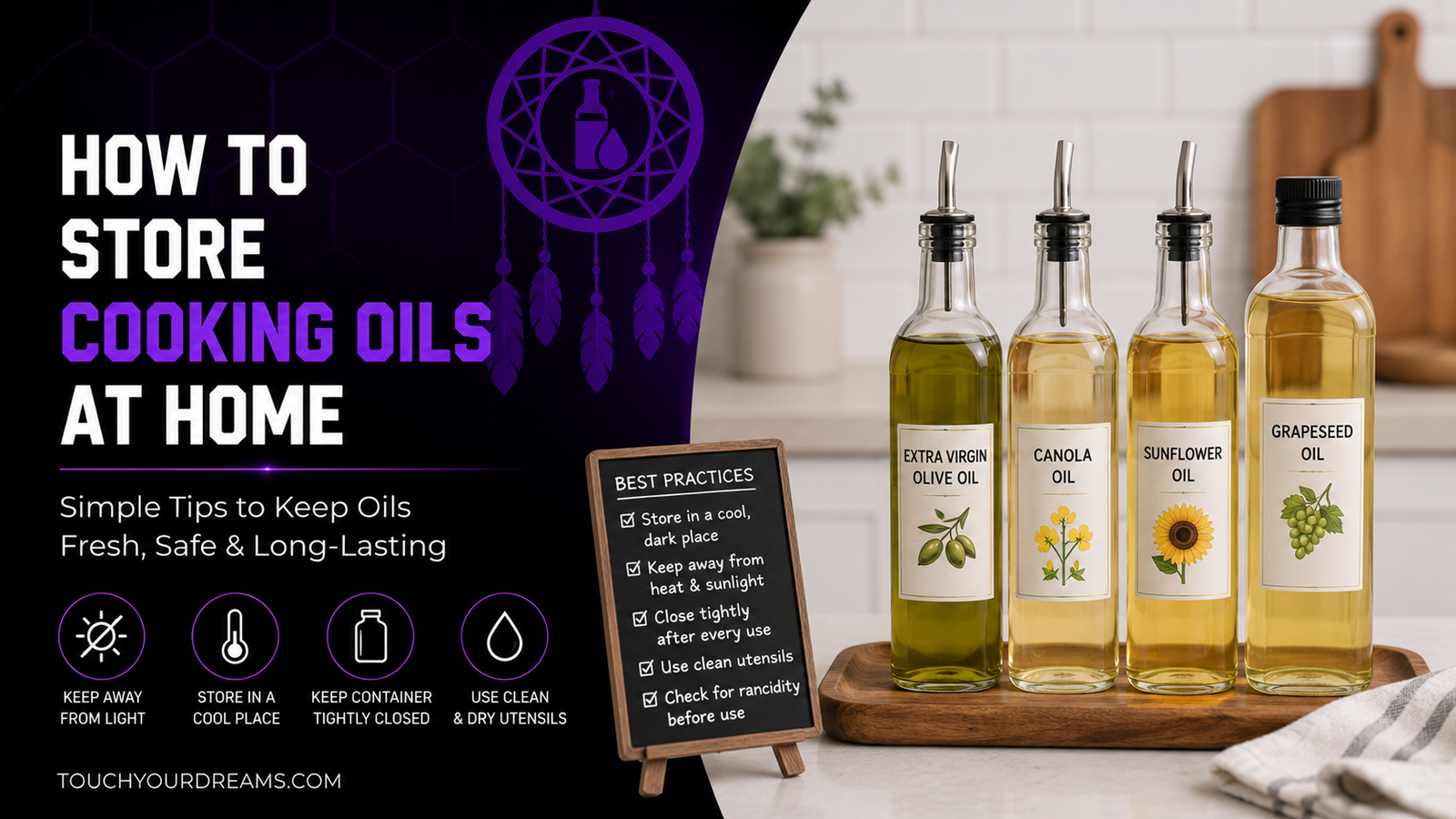
Store cooking oils in a cool, dark, and dry place away from heat, light, and air. Keep bottles tightly sealed after each use, use dark glass or stainless steel containers whenever possible, and refrigerate delicate oils like flaxseed and walnut oil. Proper storage helps prevent rancidity, preserve flavor, and extend shelf life.
Key Takeaways
- Store cooking oils in a cool, dark cabinet or pantry.
- Keep containers tightly sealed to reduce exposure to air.
- Avoid storing oil near stoves, ovens, or sunny windows.
- Refrigerate delicate oils such as flaxseed and walnut oil.
- Replace oil if it smells sour, stale, or paint-like.
- Filter used frying oil before storing it for reuse.
Why Proper Storage Matters
Cooking oils naturally break down over time through a process called oxidation. Heat, light, and oxygen speed up this process, causing oil to lose its flavor, aroma, and nutritional quality.
Proper storage helps:
- Preserve freshness
- Extend shelf life
- Maintain cooking performance
- Reduce food waste
- Protect nutritional value
How to Store Cooking Oils at Home
Keep Oil in a Cool Place
The ideal storage location is a pantry or cabinet that stays cool throughout the day. Avoid storing oils beside the stove, oven, dishwasher, or other heat-producing appliances.
Protect Oil from Light
Direct sunlight and bright kitchen lighting can speed up oxidation. Store oils in dark cabinets or use dark-colored bottles that block light.
Keep the Bottle Tightly Sealed
Every time oil is exposed to air, oxidation begins. Closing the cap tightly after each use helps preserve freshness.
Avoid Temperature Changes
Repeated heating and cooling can reduce oil quality. Try to store oils in an area with a stable temperature.
Leave Oil in the Original Container
Most manufacturers package cooking oils in containers designed to protect them from light and air. Unless the container is damaged, it’s usually best not to transfer the oil.
Should Cooking Oils Be Refriger0ated?
Some oils benefit from refrigeration, while others store well at room temperature.
Best Stored in the Pantry
- Vegetable oil
- Canola oil
- Peanut oil
- Corn oil
- Sunflower oil
- Avocado oil
Best Stored in the Refrigerator
- Flaxseed oil
- Walnut oil
- Hemp seed oil
- Unrefined specialty oils
These oils contain higher levels of delicate fats that oxidize more quickly.
What About Olive Oil?
Extra virgin olive oil is best stored in a cool, dark cabinet. Refrigeration is safe but may temporarily cause the oil to become cloudy or solid. It returns to normal once brought back to room temperature.
Best Containers for Cooking Oil
Dark Glass Bottles
Dark glass provides excellent protection from light while preserving flavor.
Stainless Steel Containers
Stainless steel blocks light completely and is highly durable for long-term storage.
Original Packaging
Many commercial oil bottles are already designed to protect the contents.
Containers to Avoid
Avoid storing oil for long periods in:
- Clear glass bottles exposed to sunlight
- Open containers
- Damaged plastic containers
- Containers without airtight lids
How Long Does Cooking Oil Last?
| Oil Type | Opened Shelf Life | Storage Recommendation |
|---|---|---|
| Olive Oil | 6–12 months | Cool pantry |
| Vegetable Oil | 6–12 months | Pantry |
| Canola Oil | 6–12 months | Pantry |
| Avocado Oil | 6–12 months | Pantry |
| Coconut Oil | Up to 2 years | Pantry |
| Sesame Oil | 6 months | Pantry or refrigerator |
| Walnut Oil | 3–6 months | Refrigerator |
| Flaxseed Oil | 1–3 months | Refrigerator |
Always check the manufacturer’s best-by date, as storage conditions can affect shelf life.
How to Tell If Cooking Oil Has Gone Bad
Discard cooking oil if you notice any of the following:
Unusual Smell
Fresh oil has a mild aroma. Rancid oil often smells sour, stale, or similar to paint.
Strange Taste
A bitter or unpleasant flavor is a strong sign the oil has deteriorated.
Appearance Changes
Some oils naturally become cloudy when refrigerated, but unexpected darkening, sediment, or unusual thickness may indicate spoilage.
Can You Reuse Used Cooking Oil?
Yes, provided it has been handled properly.
Safe Reuse Steps
- Allow the oil to cool completely.
- Strain out food particles using a fine mesh sieve or cheesecloth.
- Store it in a clean, airtight container.
- Label the container with the date.
- Reuse only a limited number of times.
Discard oil if it smokes excessively, foams, smells rancid, or has become very dark.
Common Storage Mistakes
Avoid these common errors:
- Storing oil next to the stove
- Leaving the cap loose
- Keeping oil in direct sunlight
- Ignoring expiration dates
- Using contaminated containers
- Holding onto oil long after it has gone rancid
Frequently Asked Questions
Does cooking oil need to be refrigerated?
Only certain oils. Most refined cooking oils can be stored in a pantry, while delicate oils like flaxseed and walnut oil stay fresh longer in the refrigerator.
What is the best container for storing cooking oil?
Dark glass bottles and stainless steel containers provide the best protection against light and air.
Can you freeze cooking oil?
Yes. Freezing does not harm most cooking oils. Some may become cloudy or solid but return to normal after thawing.
How do you know when cooking oil should be thrown away?
Replace oil if it develops a sour smell, unpleasant taste, or noticeable changes in color or texture.
Is reused cooking oil safe?
Yes, if it has been strained, stored correctly, and hasn’t developed signs of spoilage.
Final Thoughts
Properly storing cooking oil is one of the simplest ways to preserve its quality and reduce waste. Keeping bottles away from heat and light, sealing them tightly after each use, and refrigerating delicate oils when appropriate can significantly extend freshness. By checking your oils regularly for signs of spoilage and following good storage habits, you’ll enjoy better-tasting meals and get more value from every bottle in your kitchen.