Quick Answer: An Instant Pot cooks food by trapping steam inside a sealed pot to create pressure. The increased pressure raises the boiling point of water, allowing food to cook at a higher temperature than traditional boiling. This shortens cooking time while helping retain moisture and flavor. After cooking, the pressure is released naturally or manually before the lid can be opened.
Key Takeaways
- An Instant Pot is an electric pressure cooker with additional cooking functions.
- It cooks faster because pressure increases the cooking temperature.
- Steam generated from liquid creates the pressure needed for cooking.
- Safety mechanisms prevent the lid from opening while pressure remains inside.
- Most models also work as slow cookers, rice cookers, steamers, sauté pans, and yogurt makers.
What Is an Instant Pot?
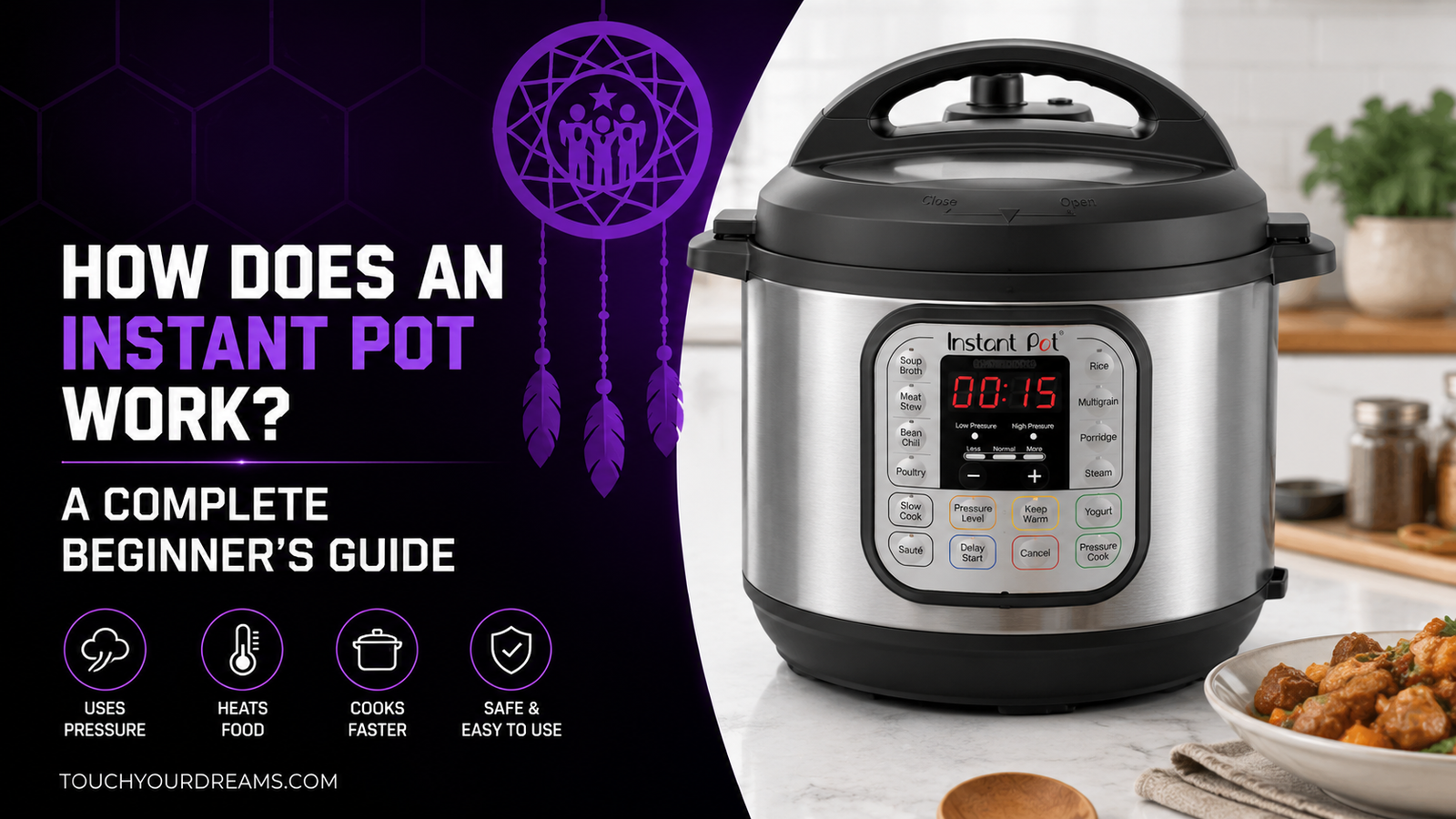
An Instant Pot is a countertop electric multicooker designed to automate pressure cooking. Unlike a traditional stovetop pressure cooker, it monitors temperature and pressure electronically, reducing the need for manual adjustments.
Most models include functions such as:
- Pressure Cook
- Slow Cook
- Sauté
- Steam
- Rice
- Yogurt
- Keep Warm
These features allow one appliance to prepare a wide variety of meals.
How Does an Instant Pot Work?
The cooking process follows a simple sequence:
Step 1: Add Ingredients and Liquid
Pressure cooking requires liquid because steam is what creates pressure. Recipes typically call for at least one cup of water, broth, or another cooking liquid.
Step 2: Seal the Lid
Once the lid is locked and the steam valve is set to Sealing, the cooker becomes airtight.
Step 3: Build Pressure
The heating element boils the liquid, producing steam that cannot escape. As steam accumulates, pressure inside the pot increases.
Step 4: Cook Under Pressure
Higher pressure raises the boiling point of water to approximately 240–250°F (116–121°C). Food cooks more quickly because it is exposed to higher temperatures.
Step 5: Release Pressure
When cooking ends, pressure is released using one of two methods:
- Natural Release: Pressure drops gradually without opening the valve.
- Quick Release: Steam is vented manually through the release valve.
The lid unlocks only after pressure has fully dissipated.
Why Does an Instant Pot Cook Food Faster?
Several factors contribute to faster cooking:
- Higher internal cooking temperatures
- Minimal heat loss from the sealed chamber
- Constant steam circulation
- Even heat distribution
- Reduced evaporation
Although the cooker requires time to build pressure before cooking starts, the overall cooking process is usually much shorter than conventional methods.
If you’re ready to start pressure cooking but still aren’t sure whether an Instant Pot is the fastest option for your kitchen, check out our detailed comparison on Which Saves More Time. It breaks down the cooking speed, convenience, and everyday performance of the Aroma 20-Cup Rice Cooker and the Instant Pot 6Qt Duo, helping you choose the appliance that best fits your cooking style.
Main Parts of an Instant Pot
Understanding the components makes the appliance easier to use.
| Part | Purpose |
|---|---|
| Inner Pot | Holds food and cooking liquid |
| Lid | Creates an airtight seal |
| Silicone Sealing Ring | Prevents steam from escaping |
| Steam Release Valve | Controls pressure release |
| Float Valve | Indicates whether pressure remains inside |
| Heating Element | Produces heat |
| Control Panel | Selects cooking programs |
How to Use an Instant Pot for the First Time
- Wash all removable parts.
- Complete the recommended water test.
- Add ingredients and the required liquid.
- Lock the lid securely.
- Set the steam valve to Sealing.
- Choose the desired cooking program.
- Wait for pressure to build.
- Release pressure safely.
- Open the lid once the float valve drops.
Understanding the Most Common Buttons
- Pressure Cook / Manual: Custom pressure cooking.
- Sauté: Browning and frying before pressure cooking.
- Slow Cook: Low-temperature cooking over several hours.
- Steam: Steaming vegetables, seafood, and dumplings.
- Rice: Automated rice cooking.
- Soup/Broth: Optimized for soups and stocks.
- Keep Warm: Maintains serving temperature after cooking.
- Delay Start: Begins cooking at a later time.
Natural Release vs. Quick Release
Choose the pressure release method based on the food.
Natural Release
Best for:
- Beans
- Soups
- Stews
- Large cuts of meat
Quick Release
Best for:
- Vegetables
- Seafood
- Pasta
- Foods that can overcook easily
Always keep hands and face away from the escaping steam.
Is an Instant Pot Safe?
Yes. Modern Instant Pots include multiple built-in safety features, including:
- Lid-locking mechanisms
- Automatic pressure regulation
- Temperature monitoring
- Overheat protection
- Pressure relief systems
When used according to the manufacturer’s instructions, they are considered safe for everyday home cooking.
What Can You Cook?
Common foods include:
- Chicken
- Beef
- Pork
- Rice
- Beans
- Lentils
- Pasta
- Vegetables
- Soups
- Chili
- Oatmeal
- Yogurt
- Cheesecake
One-pot meals are especially popular because they reduce cleanup.
Common Beginner Mistakes
Avoid these issues:
- Forgetting to add enough liquid
- Overfilling the pot
- Opening the lid before pressure is released
- Using the wrong pressure release method
- Forgetting the sealing ring
- Selecting incorrect cooking times
Frequently Asked Questions
Why does my Instant Pot take so long to come to pressure?
Pressure-building time depends on the amount of food, the amount of liquid, and whether the ingredients are cold or frozen. It commonly takes 5–20 minutes before the actual cooking timer begins.
Do you always need liquid?
Yes. Steam generated from liquid is essential for pressure cooking. Without enough liquid, the cooker may display a burn warning.
Can you open the lid while it’s cooking?
No. The lid remains locked until the internal pressure has been safely released.
Is an Instant Pot better than a slow cooker?
It depends on your needs. An Instant Pot cooks much faster and offers multiple cooking functions, while a slow cooker is designed for unattended, low-temperature cooking over several hours.
Can food overcook in an Instant Pot?
Yes. Although pressure cooking is fast, using too much cooking time can result in soft vegetables, dry meat, or mushy pasta. Following recipe-specific cooking times helps achieve the best results.
Final Thoughts
An Instant Pot may seem intimidating at first, but its operation is straightforward. By understanding how pressure cooking works, learning the basic controls, and following safe cooking practices, you’ll quickly become comfortable preparing a wide range of meals. Starting with simple recipes and gaining experience over time is the easiest way to build confidence and make the most of your appliance.