Introduction
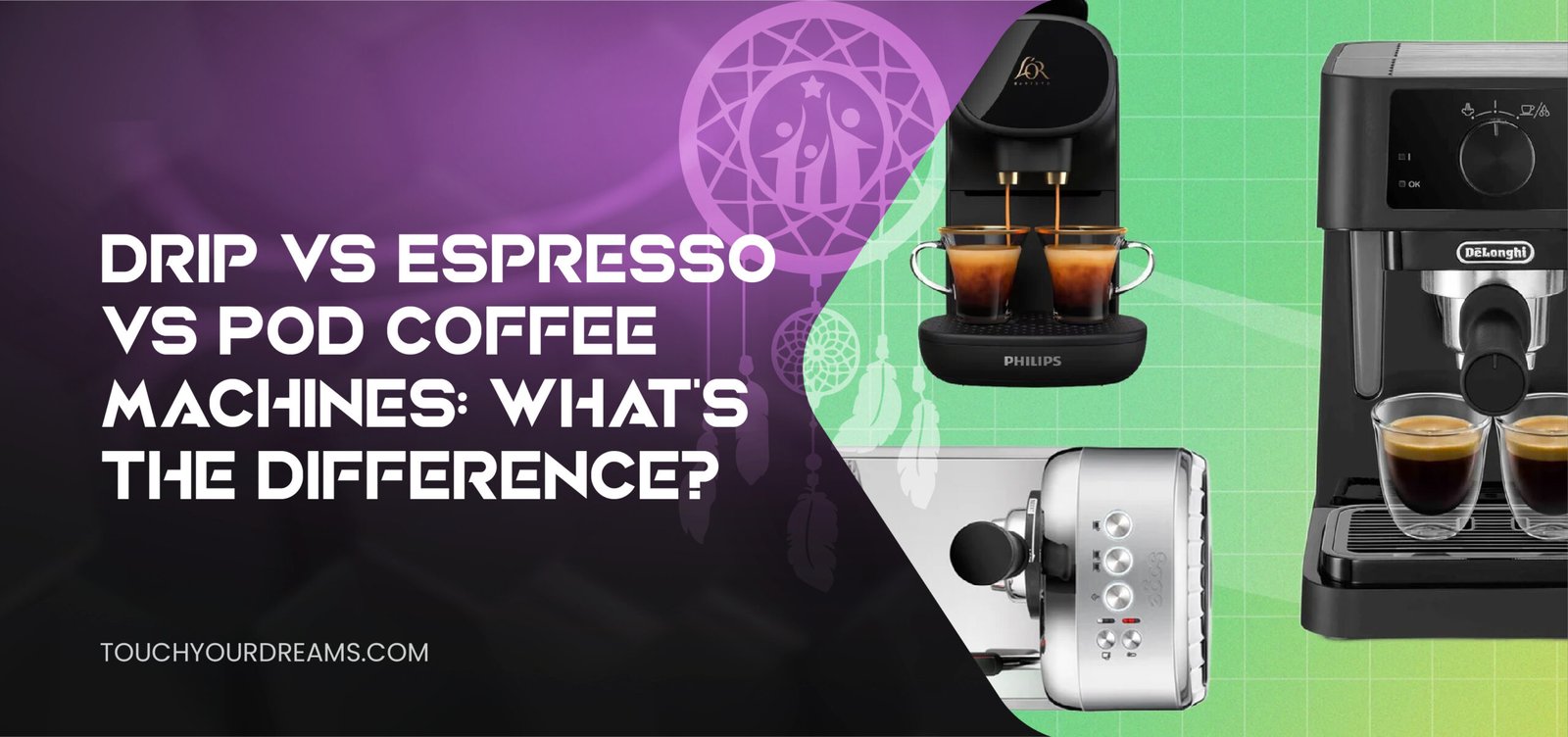
Picture this: you’re standing in an appliance store, eyes glazing over at an entire wall of coffee machines. There’s a sleek espresso maker promising café-quality shots, a trusty drip machine that looks like the one your parents had, and a shiny pod machine that practically winks at you with its convenience. Sound familiar?
Here’s the truth — all three make coffee, but they’re entirely different animals. Choosing the wrong one is like buying a race car when you just need to do the school run. So let’s break down exactly what separates drip, espresso, and pod machines, so you can walk out of that store (or close that browser tab) with complete confidence.
Why the Machine You Choose Changes Everything
Your coffee maker isn’t just an appliance — it’s a daily experience. The machine you pick determines how long your morning routine takes, how much you spend per cup, what kind of drinks you can make, and honestly, how happy you feel before 9 AM. That’s not a small thing.
Each of these three machine types has a completely different brewing philosophy. Drip is about volume and ease. Espresso is about intensity and craft. Pods are about speed and simplicity. Once you understand the DNA of each machine, the right choice becomes surprisingly obvious.
Drip Coffee Machines: The Reliable Workhorse
If coffee makers had personalities, the drip machine would be your dependable, no-drama friend who always shows up on time. It’s been around for decades, it’s in millions of homes, and there’s a very good reason for that.
How Drip Machines Work
The process is beautifully simple. You add cold water to a reservoir, place a paper or reusable filter in the basket, scoop in your ground coffee, and press a button. The machine heats the water and drips it slowly over the grounds. Gravity does the rest, pulling the brewed coffee down through the filter and into a carafe below. The whole cycle typically takes 5–10 minutes depending on the batch size.
What you get is a smooth, mild, approachable cup of coffee — nothing too aggressive, nothing too weak. It’s the Honda Civic of brewing methods: not glamorous, but consistently reliable.
Pros and Cons of Drip Coffee
The advantages are hard to argue with. Drip machines are affordable (solid models start around $30–$50), easy to operate, and capable of brewing large quantities — typically 8–12 cups per batch. Most mid-range models come with programmable timers, so your coffee is literally waiting for you when you wake up. That alone is worth the price of admission.
On the flip side, drip coffee can taste flat or bitter if your machine doesn’t reach the optimal brewing temperature (between 195–205°F). Cheap machines often fail here. The hot plate that keeps coffee warm also tends to “cook” the coffee over time, making it taste burnt after 30 minutes. A machine with a thermal carafe solves this problem neatly.
Learn how to choose the right coffee maker for your kitchen and enjoy the perfect cup every morning explore here
Who Should Buy a Drip Machine?
Drip is perfect for households that consume multiple cups daily, people who value simplicity over complexity, and anyone who wants their coffee ready without standing over it. If you’re brewing for two or more people and you don’t need anything fancier than a classic black coffee, a drip machine is your match.
Espresso Machines: The Passionate Perfectionist’s Choice
Now we shift gears entirely. Espresso machines are for people who don’t just drink coffee — they experience it. If drip is a reliable commuter car, espresso is a sports car. More power, more control, and yes, a steeper learning curve.
How Espresso Machines Work
Espresso brewing is all about pressure. The machine forces near-boiling water (around 200°F) through a tightly packed “puck” of finely ground coffee at approximately 9 bars of pressure. This high-pressure extraction happens fast — typically in 25–30 seconds — and produces a small, concentrated shot with a layer of golden foam on top called crema.
That crema isn’t just pretty. It’s a sign of proper extraction and carries a significant amount of the coffee’s aroma and flavor. From that single shot, you can build lattes, cappuccinos, Americanos, macchiatos — essentially the entire café menu lives in that one small pour.
Pros and Cons of Espresso Machines
The upside is enormous if you love café-style drinks. Espresso machines give you complete control over grind size, dose, extraction time, and milk texture. The flavor complexity you can achieve at home is genuinely remarkable once you get the hang of it. Semi-automatic machines in the $300–$600 range rival what many local coffee shops produce.
But let’s be honest about the downsides. Espresso machines are expensive upfront. They require regular cleaning — portafilters, group heads, steam wands all need attention. There’s a skill curve that takes weeks to climb. And they make small quantities, which means brewing for four people takes multiple rounds. If you just want a quick, fuss-free cup in the morning, an espresso machine might feel like using a scalpel to butter toast.
Who Should Buy an Espresso Machine?
Espresso machines are ideal for coffee enthusiasts who genuinely enjoy the brewing process, people who frequently make milk-based drinks, and those willing to invest time in learning the craft. If you spend $5–$7 daily at a coffee shop, the machine pays for itself within months.
Pod Coffee Machines: The Speed Demon of Your Kitchen
Pod machines — think Keurig, Nespresso, Dolce Gusto — are the minimalists of the coffee world. No measuring, no grinding, no mess. Just insert a capsule, press a button, and in under 60 seconds, you have coffee.
How Pod Machines Work
Each pod (or capsule) contains a pre-measured, hermetically sealed serving of coffee grounds. When you insert one and press brew, the machine punctures the pod, forces hot pressurized water through it, and delivers coffee directly into your cup. The used pod ejects automatically. It’s almost absurdly easy.
Different pod systems produce different styles. Keurig brews standard drip-style coffee. Nespresso produces espresso-style shots with genuine crema. Some systems even make teas, hot chocolates, and flavored drinks from specialty pods.
Pros and Cons of Pod Machines
Speed and convenience are the undeniable strengths. There’s virtually zero cleanup, every cup is consistent, and you can switch between flavors and roasts on a whim. For households where people have wildly different coffee preferences, pod machines are a diplomatic solution — one machine, everyone gets what they want.
The cons are real though. Pods cost significantly more per cup than buying ground coffee — often $0.70–$1.50 per serving compared to $0.20–$0.40 for drip. Over a year, that adds up to hundreds of dollars in extra spending. And then there’s the environmental issue: billions of plastic pods end up in landfills annually. Some brands now offer recyclable or compostable pods, but it’s still a problem worth acknowledging.
Who Should Buy a Pod Machine?
Pod machines suit busy professionals, people who live alone and want variety without commitment, and offices where multiple people with different tastes share one machine. If time is genuinely your scarcest resource and convenience trumps cost, pods make complete sense.
Head-to-Head Comparison: Drip vs Espresso vs Pod
Let’s stack them up directly across the factors that matter most:
| Factor | Drip | Espresso | Pod |
| Ease of Use | ⭐⭐⭐⭐⭐ | ⭐⭐ | ⭐⭐⭐⭐⭐ |
| Coffee Quality | ⭐⭐⭐ | ⭐⭐⭐⭐⭐ | ⭐⭐⭐ |
| Speed | ⭐⭐⭐ | ⭐⭐⭐ | ⭐⭐⭐⭐⭐ |
| Cost Per Cup | ⭐⭐⭐⭐⭐ | ⭐⭐⭐⭐ | ⭐⭐ |
| Drink Variety | ⭐⭐ | ⭐⭐⭐⭐⭐ | ⭐⭐⭐⭐ |
| Upfront Cost | ⭐⭐⭐⭐⭐ | ⭐⭐ | ⭐⭐⭐⭐ |
Cost Breakdown: Which One Is Actually Cheaper?
Over the long run, drip wins on cost — no question. Ground coffee runs about $8–$15 per 12oz bag, which produces roughly 30–35 cups. That’s under $0.50 per cup. Espresso beans cost more per bag but the per-shot cost is still reasonable at $0.30–$0.60 when brewed at home.
Pod machines have the lowest upfront machine cost (often $80–$150) but the highest ongoing cost. If you drink two cups daily using pods, you could easily spend $700–$1,000 per year just on capsules. A drip machine drinker consuming the same volume spends under $200 annually on coffee. The math matters.
Taste Test: Which Brews the Best Cup?
This is subjective, but here’s the honest breakdown. Espresso produces the most complex, layered, nuanced flavor — when made properly. It’s the highest ceiling. Drip coffee, especially from a quality machine with fresh beans, produces a clean, satisfying, versatile cup. Pod coffee is consistent and decent, but rarely exceptional. The sealed pods, while convenient, can’t fully replicate the freshness of coffee ground minutes before brewing.
Think of it like food: espresso is a chef-cooked meal, drip is a solid home-cooked dinner, and pods are a good microwave meal — perfectly fine, but you know what it is.
Environmental Impact: The Inconvenient Truth
If sustainability matters to you, this section is important. Drip machines use paper filters (compostable) or reusable metal filters — both relatively low impact. Espresso machines produce minimal waste beyond coffee grounds, which are actually great for composting.
Pod machines are the problematic option. Even with recyclable pod programs offered by brands like Nespresso, most pods still end up in general waste. If environmental footprint is a dealbreaker, drip or espresso is the greener choice.
Making Your Final Decision
Here’s a simple way to think about it. Ask yourself three questions:
1. How much time do I have in the morning?
If the answer is “barely any,” pods win on convenience. If you have 10 minutes and want something hands-off, drip is great. If you enjoy a morning ritual, espresso rewards patience.
2. What kind of coffee do I drink?
Black coffee drinkers thrive with drip. Latte and cappuccino lovers need espresso. People who want variety across different drink types will appreciate pods.
3. What’s my budget?
Tight budget? Start with a drip machine. Willing to invest? Espresso pays dividends for serious coffee lovers. Want middle ground? A quality pod machine balances upfront cost and convenience reasonably well.
Conclusion
At the end of the day, drip, espresso, and pod machines all serve the same fundamental mission — they get caffeine into your bloodstream before the world asks too much of you. But they each do it in their own unique way. Drip is dependable and economical. Espresso is expressive and craft-driven. Pods are fast and flexible. None of them is universally “best” — the best machine is simply the one that fits your life. Now that you know the real differences, you’re more than equipped to make the right call.
FAQs
1. Can espresso machines make regular drip-style coffee?
Not directly, but you can make an Americano by diluting an espresso shot with hot water, which produces a similar strength and volume to drip coffee. It won’t be identical, but it’s a solid substitute.
2. Are pod machines compatible with all capsule brands?
Not usually. Most pod machines use proprietary capsule systems — Keurig uses K-Cups, Nespresso uses its own capsules. Always check compatibility before buying third-party pods.
3. Is espresso stronger than drip coffee?
Espresso is more concentrated per ounce, but a standard serving (1–2 shots, 1–2 oz) actually contains similar or less total caffeine than a full 8 oz cup of drip coffee. It’s stronger by volume, not necessarily by cup.
4. How long do coffee machines typically last?
A quality drip machine lasts 5–10 years with proper care. Espresso machines can last 10–15 years if maintained well. Pod machines typically last 3–5 years, partly because internal components are harder to service.
5. Can I use any ground coffee in a drip machine?
Yes drip machines are the most flexible. Medium grind works best, but you have virtually unlimited options for beans and roasts. This freedom is one of drip’s biggest underrated advantages.
Discover the best coffee makers of 2026 and brew café-quality coffee at home with ease check out here