Why Choosing the Right Family Gaming Console Matters
Buying a gaming console for a family is very different from buying one just for yourself. When you shop for your own setup, you can be selfish. You can chase whatever matters most to you, whether that is graphics, exclusives, or price. But in a family home, a console has to wear more than one hat. It has to entertain kids, work for parents, survive sibling sharing, and fit into a household routine that is already busy enough.
That is exactly why the “best gaming console for kids and families” is not always the most powerful machine on the market. A family console is more like a kitchen table than a sports car. It has to be useful, welcoming, durable, and easy for different people to gather around.
A family console has to do more than play games
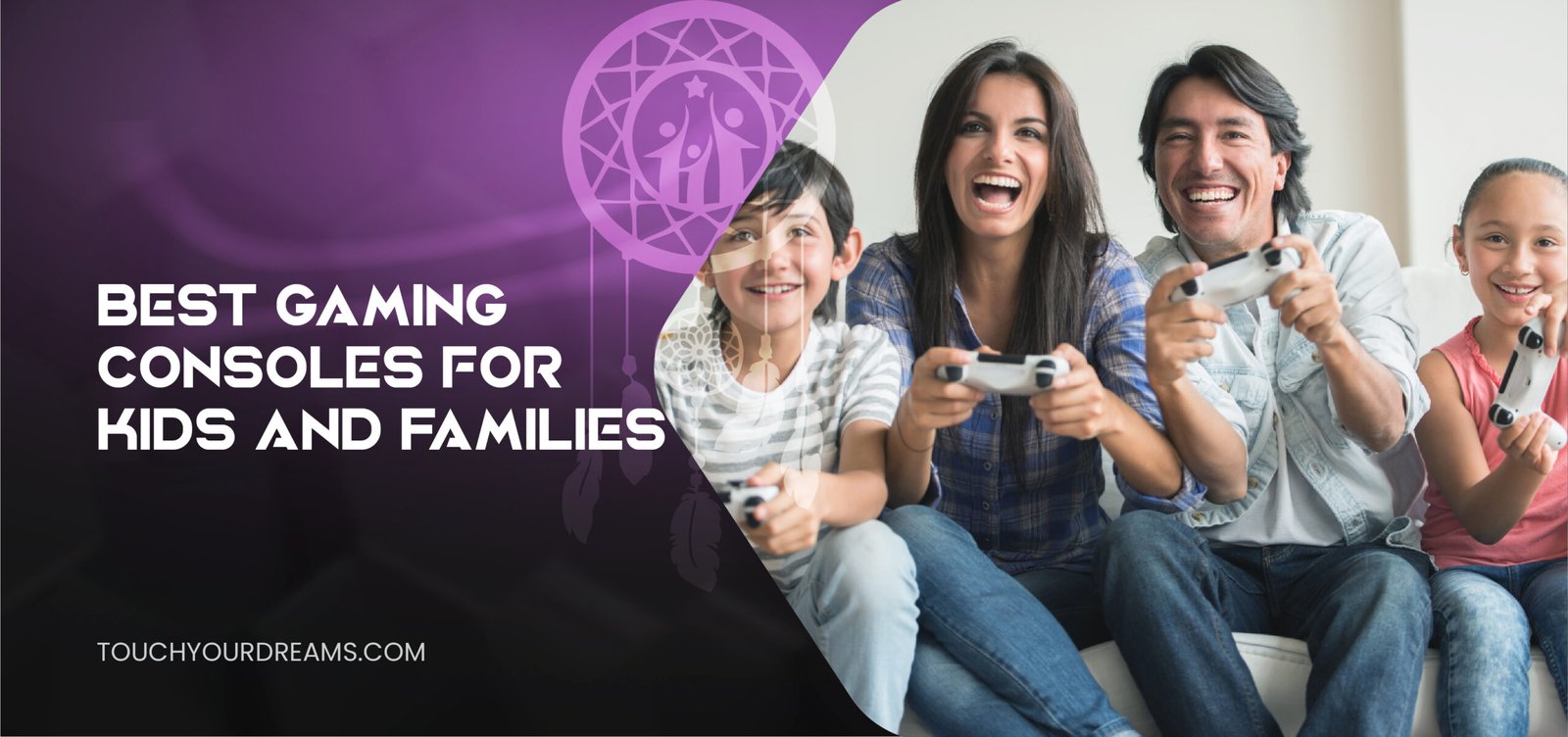
In a family setting, the console becomes a social device. It is not just about what one person plays alone after dinner. It is about weekend sessions, rainy-day entertainment, sibling cooperation, shared laughs, and sometimes peacekeeping. A good family console should support that kind of flexible use. It should feel easy to pick up, easy to share, and easy to understand. That is one reason Nintendo’s hybrid systems remain so strong for households, while home consoles like PS5 and Xbox Series S can make sense for families with older kids or a more living-room-centered setup.
The best console depends on who will actually use it
This is where many parents make the wrong call. They buy the console they would have wanted as teenagers, not the one their household will genuinely use now. Are your kids young and likely to play in short bursts? Do they share a room? Do you travel often? Do your children prefer family-friendly co-op games, or are they older and asking for a home console experience on the main TV?
The right answer changes based on the family. That is why there is no one-size-fits-all winner, even though a few consoles clearly stand above the rest.
Not sure which console is easiest to start with? Discover the best gaming consoles for beginners and find the perfect first system for new players.
What Makes a Gaming Console Good for Kids and Families
Easy setup and intuitive controls
Family tech should not feel like assembling office equipment. The best family consoles keep friction low. You want menus that make sense, controllers that do not feel intimidating, and a system that does not require a tutorial every time someone new picks it up.
Family-friendly game options
A strong family console needs a broad range of age-appropriate games. That does not mean every game has to be for little kids. It means the platform should have room for younger players, older siblings, parents, and maybe even grandparents joining in for a round or two.
Nintendo has built much of its identity around that wide accessibility, while PlayStation and Xbox balance family titles with a broader general-audience ecosystem.
Flexible multiplayer and shared play
Families rarely game in exactly the same way every day. Sometimes it is TV time together. Sometimes it is handheld play in different rooms. Sometimes it is one child playing while another watches. Systems that make multiplayer and sharing easier tend to work better in real homes than systems that assume every session is a solo marathon.
Parental controls and digital safety
This part is not glamorous, but it matters. A family console should give parents enough control over purchases, screen time, and access without turning the experience into a constant argument. The less friction there is between fun and supervision, the better.
Why convenience matters more than raw power for most families
The truth is simple: most families are not buying a console to admire frame-rate charts. They want something that fits daily life. A slightly less powerful system that is easier to share, easier to move, and easier for kids to use can easily become the better family buy.
The Best Gaming Consoles for Kids and Families in 2026
Nintendo Switch 2
Nintendo positions Switch 2 as a system with TV, tabletop, and handheld play, which instantly makes it appealing for families who do not all want to use the console in one way. Nintendo also highlights new social tools like GameChat, which supports group chat while playing, and GameShare, which can let supported games be shared during sessions.
Nintendo Switch OLED
The Switch OLED is still very relevant for family buyers because it keeps the same three-mode design while offering a vibrant 7-inch OLED screen, 64 GB of internal storage, a wide adjustable stand, and enhanced audio in handheld and tabletop modes. Nintendo still sells it as a family-friendly hybrid option, and that matters because not every household wants or needs the newest Nintendo hardware.
PlayStation 5
Sony’s PS5 remains a strong option for families with older kids, especially those who game mostly in the living room. Sony continues to emphasize fast loading, a broad PS5 library, and social features like Share Play, along with access to PlayStation Plus for online multiplayer and catalog content.
Xbox Series S
Xbox Series S is one of the best value-oriented family consoles because it is compact, digital-first, and closely tied to Game Pass. Microsoft’s official materials keep leaning into the idea of a broad library, modern features, and an affordable entry into the Xbox ecosystem.
Why these consoles stand out for family use
These four stand out because they solve different family needs. Switch 2 is the strongest all-rounder. Switch OLED is the gentler budget-conscious Nintendo option. PS5 fits households with older kids and more living-room gaming. Xbox Series S is the value machine that helps families sample a lot without buying every game individually.
Nintendo Switch 2 for Families
Why it is the strongest all-around family console
If you asked for one console that fits the widest range of family situations in 2026, Nintendo Switch 2 is the cleanest answer. Why? Because it adapts. It works on the TV, in handheld mode, and in tabletop mode. That alone gives families more options than a standard home-only console. One child can play in handheld mode while the TV is busy. Siblings can share in tabletop mode. The whole family can dock it for big-screen play in the living room. Nintendo’s hardware design has always understood a simple truth: family life is rarely neat or consistent.
GameChat and GameShare make shared play easier
Nintendo’s new GameChat and GameShare features push that family appeal even further. GameChat lets players chat and share screens while playing, and Nintendo says GameShare can let a Nintendo Switch 2 system share compatible games with nearby players, including some original Switch systems, during supported sessions. That can make family play feel less restricted and more communal.
Best type of household for Switch 2
Switch 2 is best for mixed-age households, families that travel, siblings who share, and parents who want a console that feels social rather than stationary. It is especially strong when the family wants both short play sessions and occasional bigger shared sessions.
Why hybrid gaming fits real family life
Hybrid gaming works for families because it matches the rhythm of home life. Family time is not always one big scheduled event. It is messy and interrupted. A hybrid console handles that reality better than most.
Nintendo Switch OLED for Families
Why it still makes sense in 2026
The Switch OLED still makes a lot of sense for families because it delivers the classic Switch experience without asking you to jump to Nintendo’s newest price point. It keeps the same three play modes and adds a better handheld screen, a more usable stand, and wired LAN in the dock for more stable online play.
Great for younger kids and casual players
For younger children and more casual households, the Switch OLED can be the sweet spot. It is familiar, approachable, and flexible. It does not try to impress you with raw power. It just tries to fit into your family’s routine, and that is often the smarter approach.
Who should choose OLED instead of Switch 2
Choose Switch OLED if your budget matters more than having the newest Nintendo hardware, if your kids are younger, or if the existing Switch library is already enough for your family’s needs.
PlayStation 5 for Families
Why PS5 can work well in family homes
PS5 is not the first console many people think of for family gaming, but it can absolutely work well in the right household. Sony’s ecosystem is polished, the interface is mature, and there is a huge catalog of PS5 games plus PS4-compatible options. For families with older children, especially teens, PS5 can feel like the console that keeps up as gaming tastes become more varied and more ambitious.
Best for older kids and shared living-room gaming
If your family mostly plays together in one shared room and the kids are old enough to appreciate bigger-screen, more premium-feeling gaming, PS5 becomes a strong contender. It is especially suited to homes where gaming is less about quick handheld sessions and more about planned time on the main TV.
Where PS5 is stronger than Nintendo for some families
PS5 can be stronger for families with teens who want higher-end experiences, sports titles, or a more traditional home-console identity. Sony also supports Share Play and PlayStation Plus, which can add more flexibility depending on how the household plays.
When a premium home console is the right family choice
If the family wants one central entertainment machine and the kids are growing into more demanding gaming habits, a premium home console can be the right investment.
Xbox Series S for Families
Why it is one of the best budget-friendly options
Xbox Series S is easy to recommend to budget-conscious parents because it lowers the entry cost without abandoning modern features. It is compact, digital-only, and part of the same Xbox ecosystem that supports Game Pass, cloud saves, and fast switching features.
Game Pass helps families try more games
Game Pass is one of the biggest reasons Series S makes sense for families. Microsoft says Game Pass Ultimate includes a large game library, and the broader Game Pass offering gives access to hundreds of games on console. For a family that does not yet know exactly what every child likes, that is useful. Instead of gambling on one expensive purchase after another, you can explore.
Best for families that want value and variety
Series S works best for families with slightly older kids, budget-conscious parents, and households that are comfortable going all-digital. It is also strong for families who want one shared console but do not want every new game to feel like a financial event.
Why digital convenience matters for busy households
Digital convenience is underrated. No misplaced discs, no clutter, no swapping cases in and out when three people want three different things. For some homes, that simplicity matters more than physical ownership.
Comparing Family Consoles by Type of Family
Best for families with younger kids
Nintendo Switch 2 and Switch OLED are the safest picks for younger kids because of their approachable design, flexible play styles, and strong family appeal.
Best for families with teens
PS5 and Xbox Series S become more attractive here. Teens often want deeper ecosystems, broader social features, and more mainstream home-console gaming.
Best for mixed-age households
Switch 2 wins this category because it bridges younger and older players more naturally than most systems. Its hybrid design and shared-play features give it wider reach.
Best for travel and portability
Nintendo’s systems clearly lead here. Both Switch 2 and Switch OLED are built around handheld and tabletop play, while PS5 and Xbox Series S are fundamentally home systems.
Best for budget-conscious parents
Xbox Series S usually wins for value-focused households because of Game Pass and the lower-cost digital-first approach. Switch OLED can also be strong if Nintendo is the better fit for your family’s style.
Important Features Parents Should Look For
Parental controls
Do not skip this. The most fun console in the world becomes stressful if parents feel out of control. Look for systems that let you manage screen time, purchases, and access levels clearly.
Local multiplayer support
A family console should make it easy to play together in the same room. Nintendo is especially strong here, but it is worth checking how many controllers and subscriptions your setup may actually need.
Comfortable controllers for kids
Small hands matter. Heavy or oversized controllers can turn gaming into frustration fast. This seems tiny until you watch a child struggle with it for ten minutes.
Storage, subscriptions, and hidden costs
The console price is never the whole story. Families should think about extra controllers, online subscriptions, digital purchases, and storage. Xbox Series S can look especially attractive because Game Pass changes the long-term cost of trying new games.
Common Mistakes Families Make When Buying a Console
Buying based only on hype
Hype is loud, but family life is practical. Buy the console that fits your house, not the one that wins social media arguments.
Choosing a console that fits one person instead of the whole household
A family console should not feel like it was chosen only for the oldest sibling or one gaming parent.
Ignoring the cost of extra controllers and subscriptions
This mistake is common. The starter price feels fine, then the real family setup starts adding up.
Underestimating how important portability can be
Families often discover too late that portability is not a luxury. It is the reason the console gets used.
Which Console Is Best for Casual Family Gaming
Quick sessions and party-style play
For quick, social, low-pressure play, Nintendo still feels like the natural fit. The entire design philosophy leans toward accessibility and shared moments.
Why Nintendo usually wins this category
Because Nintendo understands that not every gaming session is a deep commitment. Sometimes it is just twenty minutes of fun before dinner, and that is enough.
Which Console Is Best for Long-Term Family Value
Looking beyond the box price
Long-term value is about use, not just cost. A more expensive console that gets used constantly can be a smarter buy than a cheaper one that never quite fits.
How subscriptions and game libraries affect real value
Xbox Series S makes the strongest value argument when Game Pass is central to the plan. Nintendo makes the strongest value argument when flexibility and shared play matter most. PS5 makes sense when the family wants one strong living-room system that can grow with older kids.
How to Choose the Best Gaming Console for Your Family
Think about your children’s ages and gaming habits
Younger kids and mixed-age groups often do better with Nintendo. Older kids may lean more toward PS5 or Xbox.
Decide where gaming will happen most often
Main TV only? Portable around the house? During travel? Your answer points directly to the right console.
Start with the kinds of games your family will actually enjoy
This is the smartest shortcut. Think about the games first, then choose the hardware that makes those experiences easiest.
A great family console should fit into everyday life
The best family console is not the most impressive one. It is the one that becomes part of the house naturally.
Final Recommendations
Best overall gaming console for kids and families
Nintendo Switch 2 is the best overall pick for most families because it combines hybrid flexibility, social features like GameChat and GameShare, and a design that works for both shared TV play and portable use.
Best budget gaming console for families
Xbox Series S is the best budget-friendly choice for families that want value and variety, especially when paired with Game Pass.
Best portable gaming console for families
Switch 2 wins here, with Switch OLED remaining a very strong cheaper alternative.
Best premium family console
PS5 is the best premium option for families with older kids who want a polished, living-room-centered gaming experience.
Conclusion
Choosing the best gaming console for kids and families is really about choosing the best fit for your household. Nintendo Switch 2 is the strongest all-around answer because it is built around flexibility, shared play, and family-friendly social features. Switch OLED still makes a lot of sense for households that want the classic Nintendo family formula at a lower cost. Xbox Series S is the smartest value pick for families who want to explore a lot of games without overspending, especially through Game Pass. PS5 is the premium family choice for homes with older kids and a more traditional living-room gaming setup. Official product pages back up those roles clearly: Nintendo emphasizes hybrid play and family-oriented connection tools, Microsoft emphasizes digital value and broad access through Game Pass, and Sony emphasizes a polished home-console ecosystem with a large game library.
The best choice is the one your family will actually use together, not the one that looks best on paper. That is the real test.
Want to compare the latest consoles before buying? Explore the best gaming consoles 2026 comparison and see how Nintendo Switch, PS5, and Xbox stack up.
FAQs
What is the best gaming console for young kids?
For most families with young kids, Nintendo Switch 2 or Nintendo Switch OLED is the safest recommendation because both support TV, tabletop, and handheld play, making them easier to share and easier to fit into family routines.
Is Xbox Series S good for families?
Yes. Xbox Series S is one of the best family options for value-focused households because it is compact, digital-first, and closely tied to Game Pass, which Microsoft says offers a large game library on console.
Is PS5 too advanced for kids and families?
Not necessarily. PS5 can be a strong family console, especially for households with older kids and a shared living-room setup, since Sony supports a broad PS5 library, Share Play features, and PlayStation Plus multiplayer options.
Should families buy Switch OLED or Switch 2?
Buy Switch 2 if you want the newest Nintendo family experience with newer social features like GameChat and GameShare. Buy Switch OLED if you want a more affordable hybrid console with the same three-mode design and a better handheld screen than the original Switch.
Which gaming console is best for family travel?
Nintendo’s Switch family is best for travel because both Switch 2 and Switch OLED are designed for handheld and tabletop use, while PS5 and Xbox Series S are primarily home consoles.