Why This Debate Still Matters
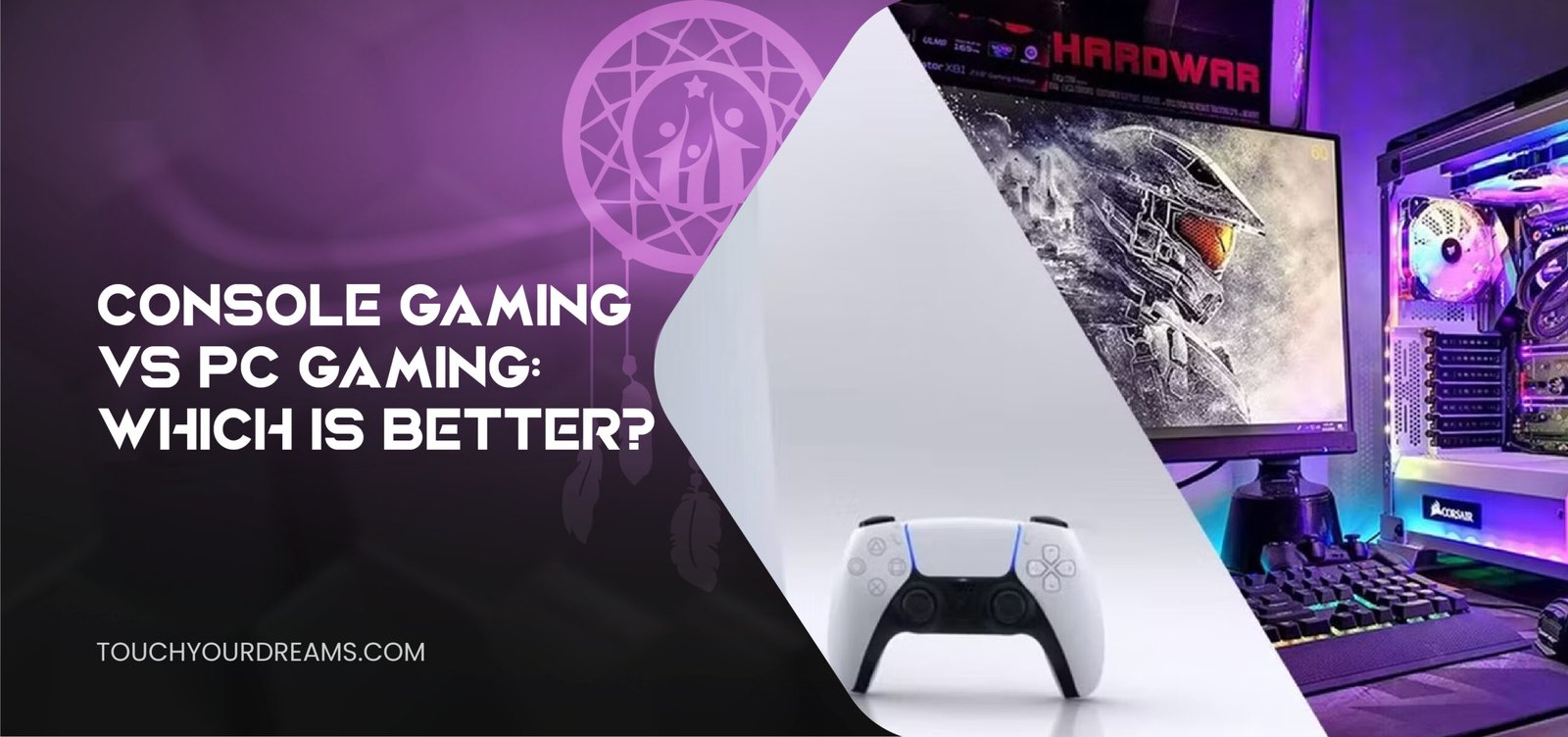
The debate over console gaming vs PC gaming has been around for years, and somehow it never really dies. Why? Because both sides offer something genuinely compelling. Console players love the simplicity, comfort, and consistency. PC gamers swear by performance, flexibility, and freedom. And if you spend even ten minutes online, you will find people defending each side like they are protecting a family legacy.
But here is the truth: this is not a battle where one side completely destroys the other. It is more like comparing an all-in-one coffee machine to a full custom espresso setup. One gives you convenience and consistency. The other gives you control and endless tweaking. Both can make a great cup. The better one depends on what kind of person you are.
The question sounds simple, but it is not
At first glance, the question seems easy. Which is better, console gaming or PC gaming? Yet the moment you start unpacking it, things get messy. Better for what? Better for budget? Better for graphics? Better for competitive play? Better for families? Better for beginners? Better for someone who just wants to sit on the couch after work and relax for half an hour?
That is where most shallow comparisons fail. They treat gaming like a single behavior, when in reality it is a whole ecosystem of habits.
“Better” depends on how you actually play
This is the part that matters most. Not how your favorite YouTuber plays. Not how your most hardcore friend plays. Not how people on gaming forums think you should play. How do you actually play?
Do you want to turn something on and be gaming in seconds? Do you love the idea of customizing every setting like a mechanic tuning an engine? Do you want to play at a desk, on a couch, or both? Are you the kind of person who enjoys troubleshooting, or does that sound like punishment?
The right answer usually lives inside those questions.
Still exploring which console fits casual play? Discover our guide to the best gaming consoles for casual gamers and find the perfect system for relaxed gaming sessions.
What Console Gaming and PC Gaming Really Mean Today
What counts as console gaming
Console gaming usually means a dedicated gaming device built primarily for playing games. You buy the hardware, connect it to a display, sign into the platform, and start playing. The entire experience is shaped around convenience and consistency. It is designed to reduce friction.
That is part of the appeal. A console says, “Here is the machine, here are the games, now enjoy.” There is elegance in that.
What counts as PC gaming
PC gaming is broader. It can mean a custom desktop, a prebuilt tower, a gaming laptop, or even a more compact setup depending on your budget and goals. Unlike a console, a gaming PC is not just one fixed experience. It is a spectrum. Some people run modest systems and play lighter games. Others build powerful rigs that look like spaceship dashboards.
That flexibility is the heart of PC gaming. It can be as simple or as elaborate as you want it to be.
Why the line between them is not as sharp as it used to be
Years ago, the difference felt cleaner. Consoles lived in the living room. PCs lived at the desk. Consoles were simpler. PCs were more complex. That still holds true in broad strokes, but the edges have blurred. Controllers work well on PC. Some PCs connect easily to TVs. Handheld PC gaming exists. Consoles are more digital and service-driven than ever.
Gaming hardware is evolving, but player habits still matter most
Even with all those changes, one thing has not changed: your habits still matter more than the hardware category itself. A platform can be technically amazing and still be wrong for you if it does not fit how you live.
The Biggest Differences Between Console Gaming and PC Gaming
Price and upfront cost
For many people, price is where the comparison begins. Consoles usually win the upfront-cost conversation. You buy the box, one controller, and you are in. It is a more predictable purchase. The cost feels finite.
PC gaming is different. Your budget can stretch from modest to absurdly high depending on what you want. Even when you aim low, there are more moving parts. Monitor, keyboard, mouse, headset, maybe a controller, maybe a better chair, maybe a storage upgrade later. Suddenly the simple purchase becomes a shopping list.
Performance and graphical flexibility
This is where PC gaming shines brightest. A gaming PC gives you more control over settings, performance targets, display choices, and overall visual experience. If you care deeply about frame rates, resolution options, ultrawide monitors, mod support, or squeezing every drop of performance from your machine, PC is hard to beat.
Consoles, however, fight back with consistency. Developers optimize for fixed hardware. That means fewer wild variables and a more predictable experience.
Ease of use and convenience
Console gaming is the king of convenience. Turn it on. Download the game. Play. There may still be updates and installs, but the overall rhythm is simpler. PC gaming asks more from you. Settings, launchers, compatibility quirks, drivers, background apps, and occasional technical weirdness come with the territory.
For some players, that is fun. For others, it is the opposite of fun.
Game libraries and exclusives
Both platforms have huge game libraries, but they feel different. Consoles tend to offer more curated ecosystem experiences. PC gaming often feels broader, messier, and more open. There is something almost library-like about PC. Endless shelves. Endless corners. Endless experiments.
Upgradability and long-term value
This is one of the clearest differences. A console is mostly fixed. What you buy is what you live with. A PC can be upgraded piece by piece over time. That creates more long-term flexibility, but also more decisions.
Console Gaming: The Main Advantages
Consoles are easier to set up
This is probably the biggest reason consoles continue to thrive. They do not ask much from you. Plug in the system, connect to your display, sign in, and start. The learning curve is gentler.
That simplicity matters more than many enthusiasts admit. After a long day, convenience is not laziness. It is a feature.
Consoles create a smoother living-room experience
Consoles feel natural in shared spaces. They are built for couch gaming, big-screen sessions, and casual passing of the controller. That matters if gaming is part of your home life rather than only your solo hobby. Families, roommates, and casual players often benefit from that shared-access feeling.
Consoles are often better for plug-and-play players
Some players do not want to tinker. They want a clean experience. Console gaming delivers that. It removes a lot of the small decisions that PC gaming introduces. That can make the whole experience feel lighter and more inviting.
Why simplicity can be a huge advantage
People often speak about simplicity as if it is a downgrade. It is not. A bicycle is simpler than a motorcycle, but that does not mean it is worse in every context. Simplicity often means fewer obstacles between you and enjoyment.
Console Gaming: The Main Drawbacks
Less hardware flexibility
The downside of simplicity is limitation. A console gives you fewer choices. You cannot endlessly tailor performance or swap components to chase the exact experience you want.
Limited upgrade options
A console generation is what it is. You wait for mid-generation revisions or next-generation hardware. There is very little room to evolve gradually.
Paid online services can add to the cost
This is one of the sneaky console costs people forget. The box may be cheaper upfront, but subscriptions, extra storage, and digital purchases add up.
You are more locked into one ecosystem
Console gaming can feel a little like choosing a neighborhood. Once you move in, your purchases, friends, subscriptions, and habits tend to keep you there.
PC Gaming: The Main Advantages
Better customization and upgrade freedom
PC gaming is freedom in hardware form. You can build around your budget, your preferences, and your goals. Want more storage? Upgrade it. Want better graphics? Change the GPU. Want a different monitor setup? Go for it.
That flexibility gives PC gaming a long runway.
Wider control options and settings
Mouse and keyboard support, controllers, racing wheels, flight sticks, custom macros, display tuning, graphics settings, mod tools, and more. PC gaming lets you shape the experience far more deeply.
More flexibility across genres and use cases
Some genres simply feel more at home on PC. Strategy games, simulation-heavy games, and many competitive shooters benefit from the platform’s input flexibility and broad support. And beyond gaming, the machine can also handle work, editing, browsing, streaming, and productivity.
PCs can do more than just play games
This is where the value argument changes. A console is mainly a gaming device. A PC can be a gaming machine, a workstation, a streaming tool, a creative platform, and a general-purpose computer. For some people, that makes the higher cost much easier to justify.
Why versatility changes the value equation
A Swiss Army knife costs more than a simple blade for a reason. If you only need one function, the extra tools may be wasted. But if you need several functions, suddenly the value becomes obvious.
PC Gaming: The Main Drawbacks
Higher entry cost for a strong setup
This is the most obvious drawback. Building or buying a strong gaming PC often costs more upfront than buying a console. For many people, that alone shapes the decision.
Troubleshooting can be frustrating
Let’s be real. PC gaming has friction. Sometimes a game launches perfectly. Sometimes it does not. Sometimes a driver update helps. Sometimes it breaks something else. If you enjoy solving puzzles, this may not bother you. If you hate technical headaches, it absolutely will.
Settings, drivers, and compatibility can overwhelm beginners
For experienced users, PC gaming can feel empowering. For beginners, it can feel like being handed the keys to a workshop before learning how the tools work.
Not every gamer wants a desk-based setup
This is underrated. Not everyone wants to sit upright at a desk to relax. Some people want to sink into a couch, stretch out, and keep things simple. PC gaming can support that, but it often feels less natural there than consoles do.
Which Is Better for Different Types of Gamers
Best for beginners
Console gaming usually wins for beginners. It is easier to understand, easier to set up, and less intimidating. A beginner does not always want maximum freedom. They often want minimum friction.
Best for competitive gamers
This depends on the game, but PC gaming often has the edge for players who want tighter control, higher performance ceilings, and input precision. Competitive players tend to care about those details more.
Best for casual gamers
Console gaming often feels better for casual players because it demands less technical energy. Casual gaming and convenience are natural partners.
Best for content creators and multitaskers
PC gaming wins here. If you want one system for gaming, editing, streaming, chatting, recording, and managing multiple tools at once, PC is in its element.
Best for families and shared spaces
Consoles usually work better here. They are easier to share, easier to place in a common room, and easier for different people to use.
Price vs Value Over Time
Consoles may cost less upfront
This is their biggest practical advantage. For many people, the lower initial cost is the entire reason consoles stay attractive.
PCs may offer better long-term flexibility
A PC can evolve. That matters over time. Instead of replacing the whole machine, you can improve parts as needed. That does not make it cheaper in every case, but it does make it more adaptable.
The cheapest option is not always the best value
This is where people get tripped up. A cheaper console may become more expensive than expected once subscriptions, accessories, and full-price digital purchases stack up. A pricier PC may justify itself if you use it for work, creation, and gaming.
Why your habits decide the real cost
Your habits determine the real winner. If you mostly want a simple gaming box, console value is hard to beat. If you want one system to do everything, PC value becomes much stronger.
Performance and Graphics: Which Wins?
Consoles deliver consistency
Consoles offer something underrated: stability. Games are built for known hardware targets. That means fewer surprises and more consistent everyday use.
PCs deliver choice and ceiling
PC gaming wins on ceiling. If you want the best possible performance and the ability to tune your experience, nothing matches it. You control the dial.
Raw power is only part of the story
Here is the catch: a stronger machine does not always mean a better personal experience. If you never tweak settings, rarely notice visual differences, and hate technical interruptions, the theoretical advantage may not matter much.
Convenience and User Experience
Why consoles feel simpler
Because they are designed to feel simpler. Every part of the system points toward reduced decision-making. That is not an accident. It is the product philosophy.
Why PCs feel more empowering
PCs can feel empowering because they let you shape the environment. You are not just using the system. You are steering it. For many gamers, that control is part of the fun.
The best experience depends on what frustrates you more
Do you get more annoyed by limits or by hassle? That one question can almost decide the whole debate. If limits annoy you more, PC will probably feel better. If hassle annoys you more, console will probably feel better.
Game Libraries and Ecosystems
Console ecosystems are curated
Console platforms often feel tighter and more guided. The ecosystem is more controlled. For some players, that curation feels premium and safe.
PC libraries are broader and often more open
PC gaming often feels like a giant city instead of a private club. There is more variety, more experimentation, more niche corners, and more weird little surprises.
Backward compatibility, mods, and digital ownership habits
PC players often benefit from broader backward access and mod communities that keep games alive for years. Consoles have improved here, but PC still feels more open-ended.
Why library style matters as much as library size
A giant library means very little if it does not match how you like to discover and play games. Some people want a curated gallery. Others want a giant warehouse to explore.
Console Gaming vs PC Gaming for Everyday Life
Couch gaming vs desk gaming
This is one of the biggest lifestyle differences. Console gaming usually feels more natural on a couch. PC gaming usually feels more natural at a desk. Yes, there is overlap, but the default moods are different.
Short sessions vs long sessions
Consoles often feel easier for quick sessions. PCs often shine in longer, more immersive, or more multitasked sessions. That is not a rule, but it is a common pattern.
Shared household gaming vs personal setups
A console can become part of the house. A PC often feels more personal, more individual, more owned by one person’s setup.
Travel, portability, and lifestyle fit
Here the comparison depends on the exact hardware, but in general, gaming platforms are becoming more lifestyle-specific. The more your routine matters, the more this decision stops being abstract and becomes personal.
How to Choose Between Console Gaming and PC Gaming
Ask where you will play most often
Living room? Bedroom? Desk? Shared space? This matters more than many spec arguments.
Think about your budget beyond the hardware
The sticker price is only the beginning. Think about games, subscriptions, accessories, upgrades, and how long you want the platform to last.
Consider whether you want simplicity or control
This might be the most important decision point. Simplicity leans console. Control leans PC.
Start with the games you actually want to play
Sometimes the smartest answer is also the simplest. Where are the games you care about most comfortable and accessible?
The right platform should fit your life, not fight it
That is the entire argument in one line. A great gaming platform should feel like it belongs in your routine.
Final Verdict
When console gaming is the better choice
Console gaming is better if you want lower upfront complexity, easier setup, cleaner couch gaming, and a more guided experience. It is the better option for many beginners, families, casual players, and people who just want gaming to feel easy.
When PC gaming is the better choice
PC gaming is better if you want performance flexibility, upgrade freedom, broader use beyond gaming, and deeper control over your experience. It is ideal for players who like customization, multitasking, and getting more than one role out of their machine.
The most honest answer for most people
For most people, console gaming is better if gaming is one part of life.
PC gaming is better if gaming is a central hobby or part of a broader digital lifestyle.
That is the cleanest honest answer. Not because one side “wins,” but because each platform shines under different priorities.
Conclusion
Console gaming vs PC gaming is not really a fight between right and wrong. It is a choice between convenience and control, between curated simplicity and open-ended flexibility. Consoles make gaming feel smoother, quicker, and easier to share. PCs make gaming feel deeper, more customizable, and more versatile over time. If you want plug-and-play comfort, a console will probably make you happier. If you want freedom, precision, and a machine that does much more than gaming, PC is likely the better fit.
The smarter question is not which platform is objectively better. It is which platform makes you want to play more often, spend more wisely, and enjoy the experience with less friction. That is the platform worth choosing.
Want a deeper comparison before choosing your next system? Check out our detailed breakdown of the best gaming consoles 2026 comparison to see how Nintendo Switch, PS5, and Xbox stack up.
FAQs
Is PC gaming better than console gaming for beginners?
Not usually. For most beginners, console gaming is easier because setup is simpler, the experience is more straightforward, and there is less troubleshooting.
Is console gaming cheaper than PC gaming?
Usually, yes at the start. Consoles tend to have a lower upfront cost, but long-term costs like subscriptions, accessories, and game purchases can still add up.
Why do people prefer PC gaming over consoles?
Many people prefer PC gaming because it offers more customization, upgrade options, broader use beyond gaming, and higher performance potential.
Is console gaming better for casual players?
For many casual players, yes. Console gaming is often more convenient, easier to use, and better suited for quick, low-stress sessions.
Which is better for long-term value, console or PC?
It depends on your habits. Consoles often offer better short-term affordability, while PCs can offer better long-term flexibility if you plan to upgrade and use the machine for more than just gaming.