Why This Comparison Matters in 2026
Buying an Xbox in 2026 sounds easy until you realize Microsoft is still offering two very different machines under the same umbrella. That is where a lot of buyers get stuck. On paper, both are “next-gen” consoles. In real life, though, they are built for different people, different rooms, and different budgets.
So, which one is worth buying?
That depends on a question many shoppers forget to ask: how do you actually play? Not how you imagine yourself playing on a perfect weekend, but how you really play on a random Wednesday after work, on a tight budget, with limited time, maybe on a smaller TV, maybe with a pile of older games already sitting on your shelf.
That is the real comparison.
The two-console strategy still confuses buyers
Microsoft’s official comparison page makes the split very clear. Xbox Series X is positioned as the more powerful machine, with true 4K gaming and a UHD Blu-ray disc drive, while Xbox Series S is designed for disc-free gaming at 1440p, with the ability to upscale to 4K. Both consoles share core next-gen features such as Xbox Velocity Architecture, Quick Resume, DirectX Raytracing, support for up to 120 FPS, backward compatibility across four generations, and support for many Xbox One accessories.
That sounds simple enough, but it creates a very real buyer problem. If both can play the same modern games, why spend more? On the other hand, if the cheaper one gives up too much, are you really saving money?
The right choice depends on how you actually play
Think of Series X and Series S like two apartments in the same city. One is spacious, premium, and built for the full experience. The other is compact, efficient, and easier on the wallet. Neither is automatically the better choice. The better one is the one that matches your life.
If you care about the sharpest visuals, physical games, and a premium home setup, Series X starts making more sense. If you want an affordable way into the Xbox ecosystem and you buy games digitally anyway, Series S suddenly looks very clever.
Discover which console fits your gaming style best with Xbox Series X vs Xbox Series S comparison find out the smarter choice for 2026!
Quick Overview of Xbox Series X and Xbox Series S
What Xbox Series X is designed to do
Microsoft describes Xbox Series X as the fastest, most powerful Xbox ever. The company highlights true 4K gaming, support for up to 120 FPS, 8K HDR, Quick Resume, and a 1TB SSD on standard models, with other editions also available. In plain English, Series X is built to be the flagship machine for players who want the fullest Xbox console experience.
You can think of it as the heavyweight of the pair. It is built for players who want fewer compromises and more breathing room.
What Xbox Series S is designed to do
Series S has a completely different mission. Microsoft markets it as the smaller, sleeker, more affordable Xbox built for digital-first gaming. Official product pages describe it as a console designed for 1440p gaming, with the ability to upscale to 4K, support for up to 120 FPS, and configurations with either 512GB or 1TB SSD storage.
That positioning matters. Series S is not trying to beat Series X in brute strength. It is trying to make modern Xbox gaming more accessible.
Why Microsoft built two very different Xbox consoles
Because not everyone shops the same way.
Some people want the best performance they can get and are willing to pay for it. Others just want an affordable box that plays current games smoothly without wrecking their budget. Microsoft’s two-console approach tries to cover both audiences without splitting the actual game library.
That is what makes this comparison interesting. You are not choosing between two separate worlds. You are choosing between two different ways to enter the same world.
Design and Size Differences
Xbox Series X design and build
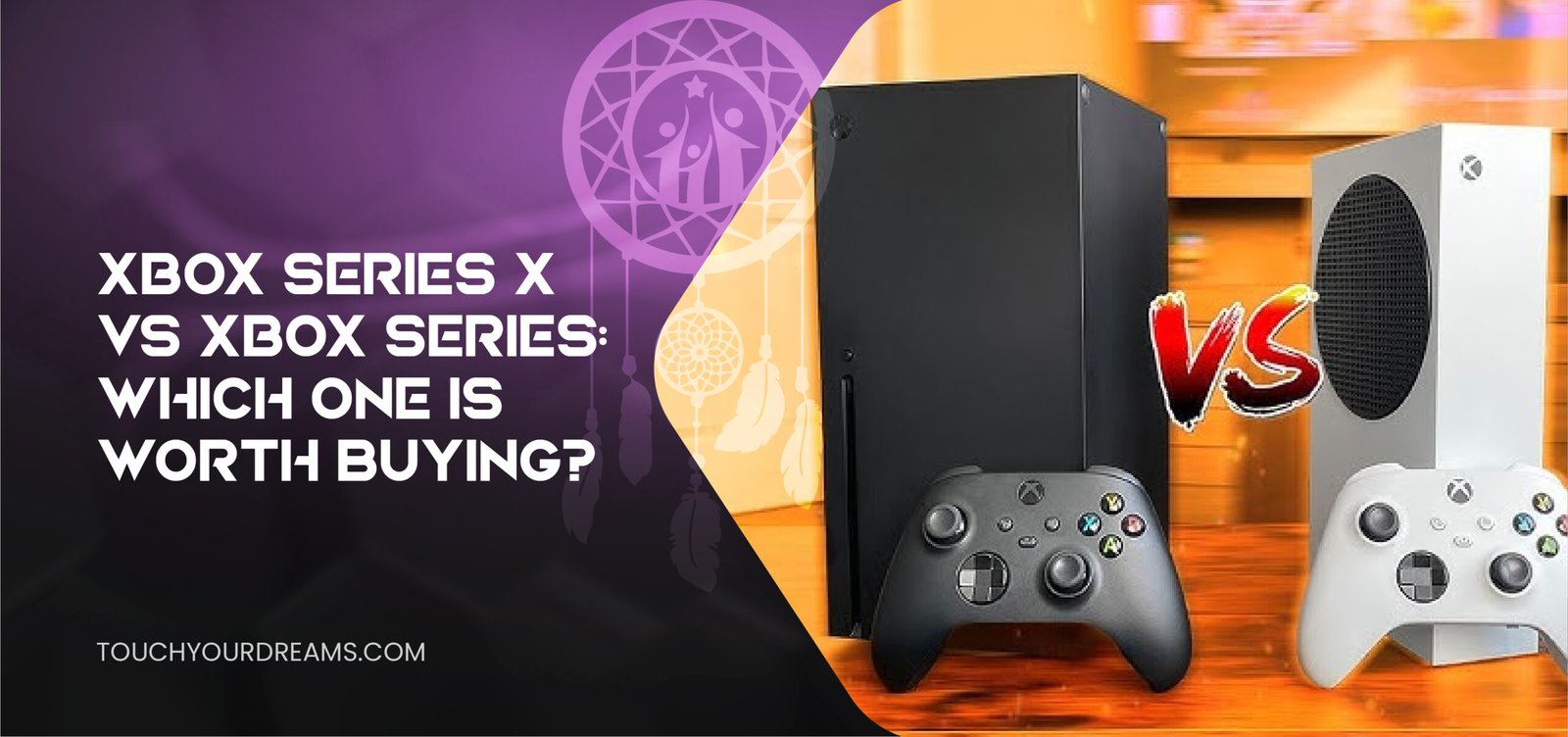
Series X looks like a quiet little tower. It is simple, black, rectangular, and unapologetically practical. There is no dramatic styling, no flashy curves, and no attempt to turn the console into modern art.
That design works in its favor. It feels serious. It feels stable. It feels like a machine that was built to sit in a gaming setup and do its job without fuss.
It also feels more substantial. When people pay for a premium console, they usually want it to feel like a premium console. Series X checks that box.
Xbox Series S design and compact appeal
Series S is the opposite kind of attractive. It is tiny, minimal, and surprisingly easy to place almost anywhere. In a small apartment, bedroom, dorm, or second TV setup, that compact form becomes a genuine advantage.
There is something quietly brilliant about a console that does not dominate your space. Series S feels less like a centerpiece and more like a clever tool. It fits where other consoles sometimes become furniture problems.
Which console fits better into your setup
If you have a dedicated gaming corner, a larger TV, and a setup built around home entertainment, Series X fits naturally. If you are tight on space, move your console around, or want something that does not take over the room, Series S is more practical.
Sometimes buyers obsess over teraflops when the more immediate question is, “Where am I even going to put this thing?”
Performance and Graphics
Native 4K vs 1440p gaming
This is one of the biggest differences, and Microsoft does not hide it. Officially, Xbox Series X is built for true 4K gaming, while Xbox Series S is designed for 1440p gaming with the ability to upscale to 4K.
That difference matters, but not equally for everyone.
If you play on a large 4K TV and care about crisp visuals, Series X has the clear advantage. It is better positioned to deliver the premium big-screen experience many players imagine when they think of a flagship console. But if you are gaming on a smaller display, sitting farther away, or simply not obsessed with pixel peeping, Series S often feels better than its spec sheet critics would have you believe.
Frame rates and real-world smoothness
Both consoles support gameplay up to 120 FPS, and that is important because it means Series S is not some slow, outdated budget box. Microsoft treats high frame rate support as a shared next-gen feature across the lineup.
Still, support and consistency are not the same thing. In the real world, Series X is the better machine for players who want stronger performance headroom. It is simply better equipped for games that push modern hardware harder.
Series S can absolutely feel fast and responsive. But Series X is the version built with more breathing room.
Load times and Xbox Velocity Architecture
Both consoles benefit from Xbox Velocity Architecture, fast SSD storage, and Quick Resume. That means both feel substantially more modern than older Xbox hardware. Jumping between games, loading large worlds, and resuming where you left off are not just premium luxuries anymore. They are everyday conveniences on both models.
This is one reason Series S remains so compelling. It may be cheaper, but it still inherits the best parts of the current Xbox experience.
Does the extra power really matter for most players
Yes and no.
If you are the kind of gamer who buys a flagship TV, notices visual detail immediately, and wants the strongest possible console experience, the extra power matters. If you mostly want to play the same games as everyone else, enjoy fast load times, and keep your spending under control, the difference becomes much less dramatic.
It is a bit like buying a high-performance car for city traffic. The extra power is real. The question is whether you will actually use it in a way that justifies the cost.
Storage and Expansion
Internal SSD differences
Storage is one of those things people underestimate until it becomes a daily annoyance.
Officially, Series X standard models come with a 1TB SSD, while Series S comes in 512GB and 1TB variants depending on the model.
That difference can have a huge effect on your experience. Modern games are not small. One or two giant titles can start chewing through storage frighteningly fast. If you like keeping several games installed at once, Series X feels less cramped from the start.
Expansion card options
Microsoft also supports Storage Expansion Cards for both consoles, which means you can increase available custom storage later. That is helpful, but it does not erase the fact that expansion costs extra.
So when comparing price, remember this: a cheaper console with less storage can become less cheap once you start fixing its limits.
Why storage matters more than many buyers think
Because friction kills joy.
Deleting and reinstalling games every week gets old fast. The more limited your storage, the more your console starts managing you instead of the other way around. Series S can still be great, but storage is one of the biggest reasons many heavy players eventually feel pulled toward Series X.
Physical Discs vs Digital-Only Gaming
Why Xbox Series X still appeals to disc buyers
Series X includes a UHD Blu-ray disc drive. That one feature instantly makes it more attractive for collectors, bargain hunters, and anyone with an older physical Xbox library.
Physical discs still matter to plenty of players. They let you shop sales more freely, borrow games, buy used titles, and keep ownership feeling a little more concrete. For some buyers, the disc drive is not a side detail. It is the reason to choose Series X.
Why Xbox Series S is built for a digital future
Series S is all-digital. No discs, no exceptions. That sounds limiting until you realize many players already live that way. They download games, rely on cloud saves, and never touch physical media.
If that is you, the missing disc drive may not feel like a sacrifice at all. In fact, it may feel like trimming away something you would never use.
Game Library and Backward Compatibility
Shared Xbox ecosystem advantages
Here is where Microsoft’s strategy looks smart. Both Series X and Series S live inside the same Xbox ecosystem. Both support cloud saves, both tap into the same digital marketplace, and both can access the same broad Xbox game catalog.
That means you do not feel “locked out” of modern Xbox gaming just because you picked the cheaper machine. The ecosystem remains intact.
Playing games across generations
Microsoft says both consoles can play thousands of games across four generations and work with Xbox One gaming accessories. That makes the upgrade path friendlier and helps protect the value of older purchases.
This is a big deal. For a lot of players, buying a new console feels less risky when the past does not get thrown in the trash.
Why both consoles feel bigger than their price tags suggest
Because you are not just buying hardware. You are buying access to an ecosystem with years of games behind it and shared features across the lineup.
That is one reason even Series S, despite its lower price and lighter specs, can feel like a generous package.
Xbox Game Pass and Long-Term Value
Why Game Pass changes the buying decision
Game Pass is one of the biggest reasons this comparison is not just about hardware. Microsoft’s official messaging ties Xbox consoles closely to access to hundreds of games with Game Pass, and when paired with Game Pass Ultimate, the ecosystem also includes online multiplayer, EA Play, and day-one releases.
That changes the value equation dramatically.
Without a subscription service like this, Series S might feel more clearly like “the cheaper, lesser box.” With Game Pass in the mix, it starts to feel like a smart gateway to an enormous playable library.
Which console gets more value from the subscription model
Oddly enough, Series S may benefit the most emotionally from Game Pass, while Series X may benefit the most practically.
Series S feels like the perfect Game Pass machine because it is affordable, digital-first, and built around easy access. It is the console version of saying, “Let me in without making this expensive.”
Series X, meanwhile, pairs Game Pass value with better storage, better visuals, and stronger long-term comfort. So if you are going to dive deep into the Xbox ecosystem for years, Series X arguably turns that subscription value into an even better overall experience.
Daily User Experience
Quick Resume and faster switching
Quick Resume is not just a flashy bullet point. It changes how relaxed console gaming feels. Both Series X and Series S support it, which means you can bounce between games without constantly restarting your rhythm.
Once you get used to that convenience, going back to slower, clunkier systems feels like rewinding time.
Multiplayer, cloud saves, and convenience
Microsoft’s ecosystem also leans heavily into convenience. Digital games, saves, and backups live in the cloud, and your digital purchases move with you. That makes both consoles feel flexible and modern in daily use.
The end result is simple: both machines are easy to live with.
Same ecosystem, different priorities
That is really the whole story. Same family, same ecosystem, same general Xbox identity. But the priorities differ.
Series X prioritizes premium performance and flexibility with discs.
Series S prioritizes affordability, simplicity, and digital convenience.
Who Should Buy Xbox Series X
Best for performance-focused gamers
If you care about native 4K gaming, stronger performance headroom, better long-term comfort, and less compromise, Series X is the better buy. It is the machine for the gamer who wants their console to feel capable not just today, but several years from now as games become heavier and more demanding.
Best for players with disc libraries
If you already own physical Xbox games or like the option to buy used and discounted discs, Series X makes much more sense. The disc drive alone can pay for itself over time if you shop smart.
Best for big-screen home setups
Series X is especially worthwhile if you game on a larger 4K display. That is where its strengths become easier to appreciate. On a premium TV, the visual difference matters more. The console finally gets room to stretch its legs.
Who Should Buy Xbox Series S
Best for budget-conscious buyers
Series S is the easy recommendation for buyers who want to spend less upfront but still want a true current-generation Xbox experience. It is proof that “budget” does not always mean “bad.” Sometimes it just means focused.
Best for casual and digital-first gamers
If you buy digitally, mostly play a handful of games at a time, and do not care about physical media, Series S feels smart. Clean. Efficient. It gives you the essentials without asking you to pay flagship prices.
Best for smaller spaces and secondary setups
Series S is also great as a second console, a bedroom console, or a family console where space matters. It is almost absurdly convenient in situations where a larger flagship machine would feel excessive.
Xbox Series X vs Xbox Series S by Gamer Type
Best for competitive players
Series X gets the edge here because stronger hardware and better performance headroom matter more when you play fast-paced games seriously.
Best for first-time console buyers
Series S is often the easier starting point. It lowers the entry cost and still gives you access to the same Xbox ecosystem and Game Pass benefits.
Best for families
This depends on the household. If the family shares games digitally and wants lower cost, Series S is practical. If the family uses physical games, wants more storage, or plays on a main living-room TV, Series X is stronger.
Best for collectors
No question: Series X. Physical media still matters to collectors, and Series S simply does not serve that audience.
Best for long-term value
This is the toughest call. Series S often wins on short-term value because it is affordable. Series X often wins on long-term value because it gives you more storage, a disc drive, and more premium performance from day one.
Price vs Value in 2026
Upfront cost vs total cost of ownership
The trap most buyers fall into is confusing cheap with cost-effective. The console price is only the opening chapter. After that come games, accessories, subscriptions, storage expansion, and the way you shop over time.
If you buy games digitally, rely on Game Pass, and do not need huge local storage, Series S can absolutely be the cost-effective winner. If you expand storage later, regret not having a disc drive, or want stronger performance on a premium TV, Series X starts looking smarter.
Which one saves more over time
Series S saves more money upfront. That part is easy.
Series X can save more frustration over time.
And that distinction matters. Sometimes spending more once is cheaper than fixing compromises for years.
Final Verdict
When Xbox Series X is worth buying
Xbox Series X is worth buying if you want the best Xbox console experience available in this generation. It is the better choice for native 4K gaming, physical media, heavier players, bigger displays, and buyers who want fewer compromises. Officially, it is the more powerful console, with true 4K gaming, a UHD Blu-ray disc drive, up to 120 FPS support, and 1TB SSD storage on standard models.
When Xbox Series S is worth buying
Xbox Series S is worth buying if your goal is clear: spend less, go digital, and still enjoy the full Xbox ecosystem with modern features like Quick Resume, Xbox Velocity Architecture, and Game Pass access. It is built for 1440p gaming with upscaling to 4K, comes in 512GB and 1TB variants, and shares many of the same next-gen ecosystem benefits as Series X.
The best answer for most people
For most people, the smartest answer is this:
Buy Xbox Series X if gaming is one of your main hobbies.
Buy Xbox Series S if gaming is important, but budget matters more than perfection.
That is the simplest honest summary. Series X is the better machine. Series S is the better bargain for the right person.
Conclusion
Xbox Series X vs Xbox Series S is not really a battle of good versus bad. It is a battle of priorities. Series X gives you the premium route: more power, true 4K gaming, a disc drive, more comfortable storage, and stronger long-term flexibility. Series S gives you the efficient route: lower cost, smaller size, digital convenience, and access to the same Xbox ecosystem with features like Quick Resume, Game Pass, backward compatibility, and support for up to 120 FPS.
So which one is worth buying? If you want the best Xbox you can get and you plan to use it heavily, buy Series X. If you want the smartest low-cost entry into modern Xbox gaming, buy Series S. The right choice is not the louder one. It is the one that fits your habits, your setup, and your wallet without making you feel like you settled.
Explore our guide to the best gaming consoles 2026: Nintendo Switch vs PS5 vs Xbox and pick the perfect console for your setup!
FAQs
Is Xbox Series X much more powerful than Xbox Series S?
Yes. Microsoft positions Series X as the more powerful console built for true 4K gaming, while Series S is designed for 1440p gaming with 4K upscaling. In everyday play, the difference is more noticeable on larger 4K displays and in more demanding games.
Is Xbox Series S still worth buying in 2026?
Yes, especially for budget-conscious and digital-first gamers. It still shares key next-gen features like Quick Resume, Xbox Velocity Architecture, backward compatibility, and Game Pass access with the broader Xbox ecosystem.
Can Xbox Series S play discs?
No. Xbox Series S is an all-digital console and does not support disc-based games. Xbox Series X includes a UHD Blu-ray disc drive.
Do Xbox Series X and Series S play the same games?
Generally, yes within the Xbox Series generation. Microsoft’s ecosystem gives both consoles access to the same modern Xbox platform features and broad backward compatibility across four generations, though performance and visual quality can differ.
Which Xbox is better for Game Pass?
Both work well with Game Pass, but in different ways. Series S feels like the most affordable Game Pass machine, while Series X gives you the more premium Game Pass experience thanks to better visuals, more storage, and stronger hardware headroom.